
Gratiot County Property Tax Records
Gratiot County property tax records are managed by the County Equalization Department in Ithaca. You can search parcel data, view assessed values, and look up tax bills through the county's online portal. The Equalization Department sets assessed values for all real and personal property in Gratiot County, and the County Treasurer handles billing and collections. Whether you need current tax information or historical assessment data, this page walks you through how to find what you need.
Gratiot County Overview
Gratiot County Equalization Department
The Gratiot County Equalization Department is the starting point for property tax records in the county. Karen A. Burns serves as the Director of Equalization. The office is responsible for reviewing and equalizing property assessments across all townships and cities in Gratiot County. They also keep records of property transfers, splits, and new construction. All parcel data flows through this office before tax bills go out.
The department uses the BS&A Online platform for public access to property tax data. Through this system, you can look up any parcel in Gratiot County by owner name, address, or parcel number. The portal shows assessed values, taxable values, and tax bill history. It also shows any special assessments tied to a parcel. This is the fastest way to get Gratiot County property tax information without calling the office.
| Director | Karen A. Burns |
|---|---|
| Address | 214 E. Center St., Ithaca, MI 48847 |
| Phone | 989-875-3255 |
| Online Search | BS&A Property Search Portal |
| County Website | gratiotmi.com - Equalization |
The BS&A portal for Gratiot County lets you search at no cost for basic tax data. Detailed reports or certified documents require a visit to the office or a written request. The office is open standard business hours, Monday through Friday.
Search Gratiot County Property Tax Data Online
The BS&A Online portal for Gratiot County is the primary tool for searching property tax records. It covers all townships and cities in the county. You can search by owner name, property address, or parcel identification number. Results show the parcel's legal description, school district, assessed value, taxable value, and current tax status.
The screenshot below shows the BS&A property search portal used by Gratiot County for public access to tax records.
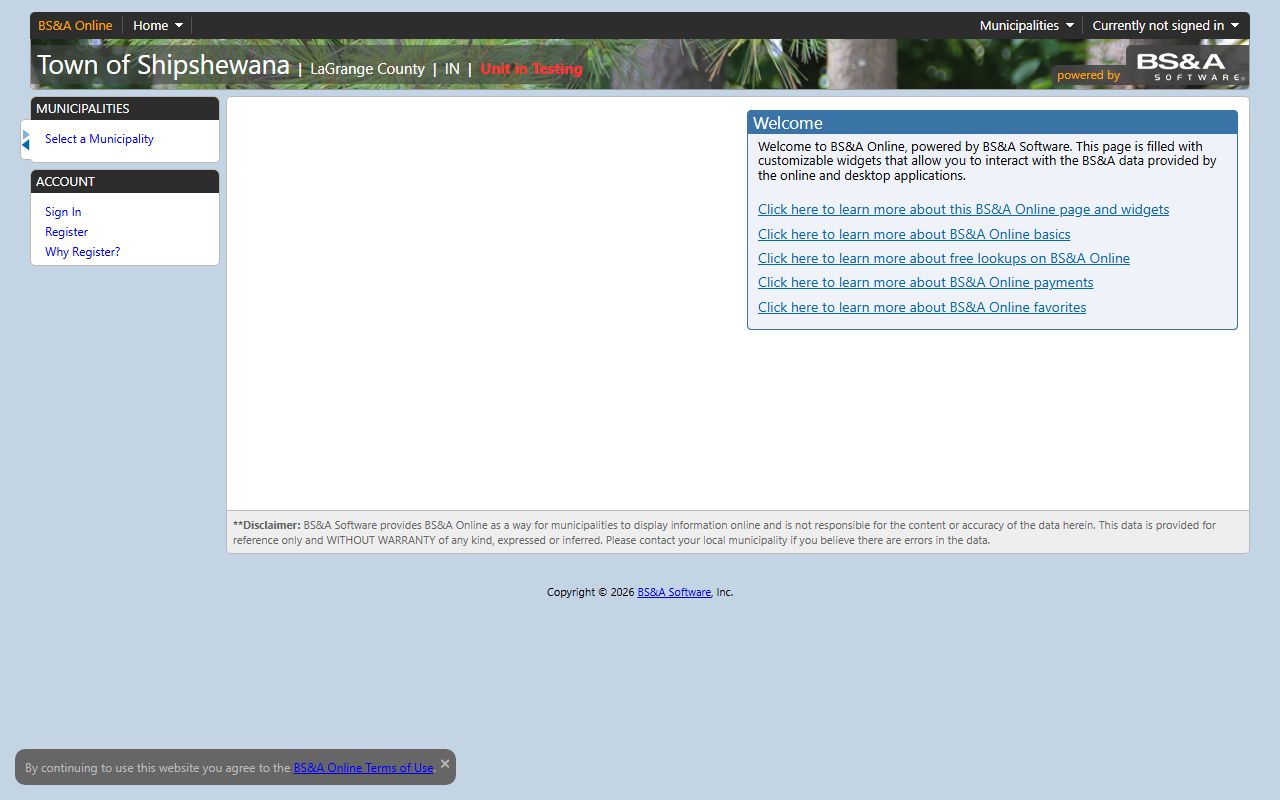
Use the parcel number or owner name to pull up full tax history and current assessment details for any Gratiot County property.
Under MCL 211.1, all real property in Michigan is subject to taxation. Gratiot County assesses property at 50% of true cash value, which aligns with state law. The taxable value is capped and can only rise by the rate of inflation or 5%, whichever is less, until ownership changes. The BS&A system shows both figures so you can see how a parcel is taxed.
If you need records for a specific tax year, the portal stores several years of history. Older records may need to be requested directly from the Equalization Department. Staff can pull archived data for past ownership and assessment periods.
How Gratiot County Assesses Property
Each year, local assessors in Gratiot County's townships and cities review property values. These assessors report their totals to the County Equalization Department. The department then checks whether each unit's assessment level is at the required 50% of true cash value. If a unit is over or under, the state equalizes values to bring them into compliance. This process protects property owners from unequal treatment across different parts of the county.
Tax Day in Michigan is December 31. The value of your property on that date is what drives your assessment for the following year. Notices of assessment go out in February. If you think your assessment is wrong, you have the right to appeal. The first step is to appear before the local Board of Review in March. Gratiot County's March Board of Review meets in each township and city. You must appear or send a written protest to challenge your value at this stage.
After the Board of Review, you can take your case to the Michigan Tax Tribunal. For residential and agricultural property, the deadline to file at the Michigan Tax Tribunal (517-335-9760) is July 31. Commercial property petitions are due May 31. The Tax Tribunal is an independent state agency that hears property tax disputes.
Note: You must protest at the local Board of Review before you can appeal to the Michigan Tax Tribunal for most property classes.
Gratiot County Property Tax Exemptions
Michigan offers several exemptions that can reduce your property tax bill in Gratiot County. The most common is the Principal Residence Exemption, known as the PRE. Under MCL 211.7u, homeowners who live in their home as their main residence can claim an exemption that removes up to 18 mills of school operating taxes. To claim the PRE, you file Form 2368 with your local assessor by June 1 or November 1.
Agricultural property in Gratiot County may qualify for a separate exemption. Under MCL 211.7v, qualified agricultural property is exempt from the 18-mill school operating levy. Gratiot County has significant farmland, and this exemption matters for many landowners here. The assessor reviews eligibility each year based on how the land is used.
Low-income homeowners may qualify for the poverty exemption. You apply using Form 5737 and Form 4988 at the local Board of Review in March. The board reviews income and asset information to decide if you qualify. If approved, your property tax can be reduced or waived entirely for that year.
Disabled veterans and seniors may also have access to exemptions or reductions. Contact the Gratiot County Equalization Department at 989-875-3255 to learn which programs may apply to your property.
Gratiot County Register of Deeds
Property transfers in Gratiot County are recorded at the Register of Deeds office. Mary J. Kunde serves as the Register of Deeds, reachable at 989-875-5210. The office is located at the same courthouse address as Equalization at 214 E. Center St. in Ithaca. Every time a property sells or changes hands, a deed must be recorded here. The deed becomes the official record of ownership and feeds into the assessment records maintained by Equalization.
When you buy property in Gratiot County, you or your title company must file a Property Transfer Affidavit using Form L-4025 within 45 days of the transfer. This form tells the assessor about the sale so they can update ownership records and uncap the taxable value. Failing to file on time can result in penalties. Recording a deed costs $30 for the first page. Copies of recorded documents cost $1 per page, and certified copies cost $5.
Deed records also affect property tax calculations. When ownership changes, the taxable value resets to the state equalized value. This can cause a significant jump in the tax bill for the new owner. Reviewing the BS&A portal after a purchase helps confirm that the transfer was recorded correctly.
Gratiot County Treasurer
The Gratiot County Treasurer's office handles property tax billing and collections. Mary L. Holzhausen serves as Treasurer, and the office is reachable at 989-875-5220. After local townships and cities send out summer and winter tax bills, unpaid taxes are turned over to the county. The Treasurer then bills for delinquent taxes and handles the tax foreclosure process for properties with long-overdue balances.
Summer taxes are generally due September 14. Winter taxes are due February 14. Taxes not paid to the local township or city by March 1 become delinquent and transfer to the County Treasurer. Interest and fees begin to accrue on delinquent taxes. Michigan law allows a four-percent administration fee and one percent per month interest on delinquent amounts. After three years of unpaid taxes, the county can begin foreclosure proceedings.
You can check your tax payment status and look up delinquent tax balances through the Michigan Department of Treasury property tax resources. The state also offers a property tax estimator to help you project what you might owe.
Delinquent Gratiot County property taxes not paid within three years can result in foreclosure. Contact the Treasurer's office early if you are having trouble paying.
Your Rights as a Gratiot County Property Owner
Michigan law gives property owners clear rights when it comes to taxes. Under MCL 205.735, the Taxpayer Bill of Rights outlines what you can expect from the assessment and appeal process. You have the right to know how your property was assessed, to see the data used, and to challenge the value through a formal appeal.
The appeal process in Gratiot County starts with the local Board of Review each March. From there, you can go to the Michigan Tax Tribunal. The Tribunal handles disputes over assessed value, taxable value, exemption denials, and classification errors. Most homeowners who appeal do so because they believe the assessed value is higher than 50% of what they could sell the property for. Bringing comparable sales data and your own estimate of value strengthens an appeal.
You also have the right to review your property record card. This document shows the data the assessor used to calculate your value, including square footage, age, condition, and features. Ask for it at the local assessor's office or through the Equalization Department.
Property Transfers in Gratiot County
Every property transfer in Gratiot County triggers several steps in the tax system. First, the deed must be recorded at the Register of Deeds. Second, the buyer must file Form L-4025, the Property Transfer Affidavit, within 45 days. The assessor uses this form to determine the sale price and uncap the taxable value. Under MCL 211.30, the assessor has the authority to review recent sales to set values. This is why recent sales in your neighborhood can affect your assessment even if you did not sell.
If the new owner plans to use the property as their principal residence, they should also file the PRE form at the same time. This prevents the 18 school operating mills from hitting the first tax bill after purchase. Missing this step is common and leads to higher-than-expected tax bills in the first year of ownership.
Nearby Counties
Gratiot County borders several Mid-Michigan counties. If you are researching property that may be near a county line, check these neighboring county offices as well.