
Michigan Property Tax Records
Michigan property tax records are kept by local assessors and county equalization offices across all 83 counties. These records include assessed values, taxable values, tax bills, ownership details, and payment history for every parcel in the state. You can search Michigan property tax records online through the BS&A Online portal, county GIS mapping systems, and individual county websites. This page covers how to find and access property tax records throughout Michigan.
Michigan Property Tax Records Overview
How Michigan Property Tax Records Work
Michigan's property tax system is governed by the General Property Tax Act, MCL 211.1 et seq. This law sets the rules for how property is assessed, billed, and collected across all 83 counties. Local township and city assessors handle the day-to-day work of valuing property. Each county's equalization director then conducts annual ratio studies to make sure assessments are consistent across all jurisdictions in the county.
Tax Day falls on December 31 each year. The status of your property on that date determines your assessment for the coming year. Assessment notices go out in February. Property is assessed at 50% of its true cash value under MCL 211.30. The taxable value, which is what your bill is actually based on, can only increase by 5% or the rate of inflation each year, whichever is less. When a property sells, the taxable value resets to the state equalized value for the next year.
Summer tax bills typically go out July 1 and are due September 14. Winter tax bills go out December 1 and are due February 14. Delinquent taxes are turned over to the county treasurer after those deadlines. The county holds them for up to three years before the property can enter the tax foreclosure process.
Tax rates in Michigan are expressed in mills. One mill equals $1 for every $1,000 of taxable value. Each local unit sets its own millage rates, which can include county, township or city, school, and special district levies. Rates vary widely across the state depending on where a property is located.
Searching Michigan Property Tax Records Online
The most common way to search Michigan property tax records is through BS&A Online. Most Michigan counties and cities use this platform. You can look up records by owner name, property address, or parcel number. Each county has its own BS&A portal, accessible through the county equalization or treasurer website. Search results typically show assessed value, taxable value, tax bills, payment status, and ownership history. Some portals also show building information and prior sales data.
The Michigan Department of Treasury's property tax page is a good starting point. It links to county resources and explains how the system works. The screenshot below shows the Treasury's property tax resource page, which covers assessments, exemptions, and the appeal process.
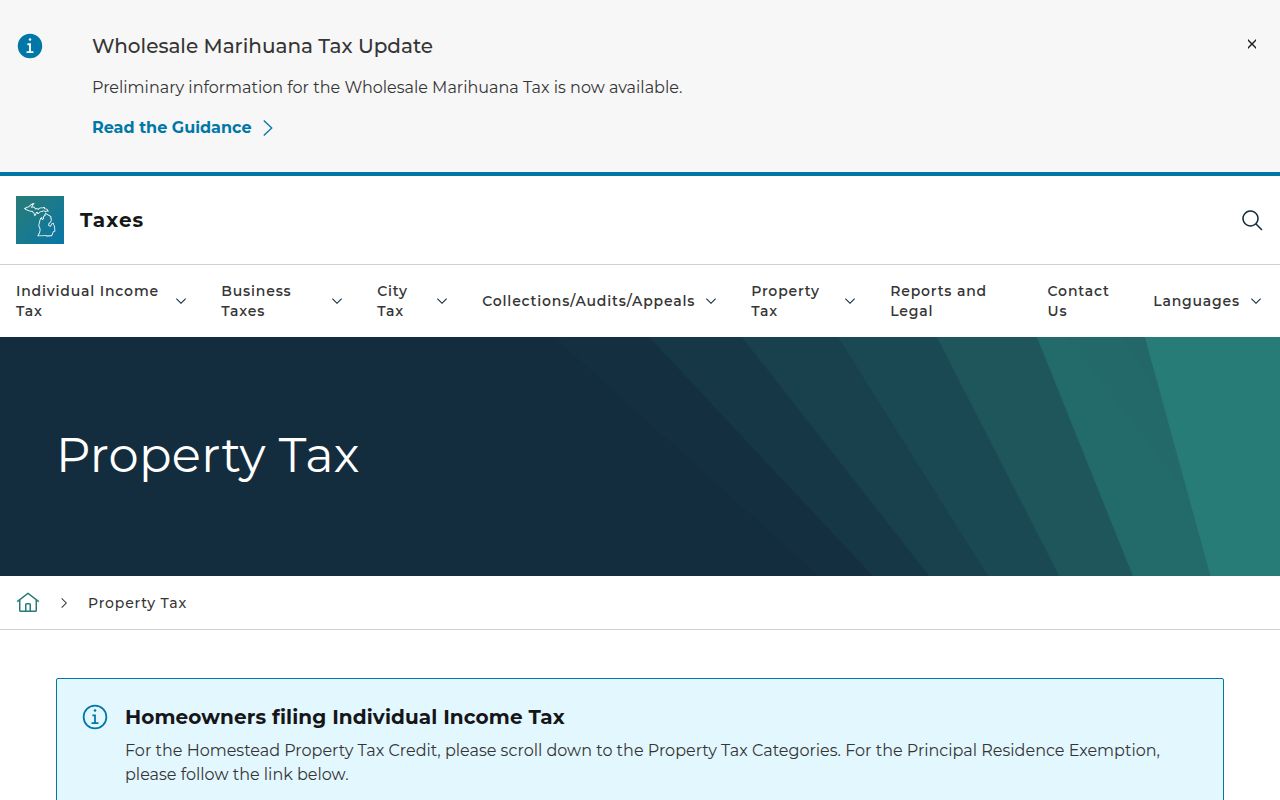
The state also offers a Property Tax Estimator where you can estimate what a property's tax bill might be based on its value and local millage rates. This tool is useful if you are considering buying property in Michigan and want to get a sense of what taxes might look like.
Many counties also maintain GIS mapping systems where you can view parcel boundaries, aerial photos, and property data on a map. These are especially useful when you know the general location of a property but not the exact address. County GIS portals vary in their features, but most allow you to click on a parcel and pull up basic ownership and assessment data.
For in-person searches, contact the county equalization office or your local township or city assessor. Staff can look up records, print tax history, and help you find parcel numbers. Some counties also have public access terminals at the courthouse where you can search for free.
Michigan Property Tax Exemptions
Michigan offers several property tax exemptions that can reduce what you owe. The most common is the Principal Residence Exemption (PRE), which removes 18 mills from your tax bill if the property is your primary home. You file Form 2368 with your local assessor to claim it. The PRE is authorized under MCL 211.7u. Once approved, it stays in place as long as the property remains your primary residence. If you sell the home or move, you need to rescind the exemption.
Low-income homeowners may qualify for the Poverty Exemption. This is a partial or full reduction in property taxes based on your income and household size. Each local unit sets its own income guidelines. You apply using Form 5737 and Form 4988 through your local Board of Review, typically in March. The Board of Review has the authority to grant or deny the exemption based on the documentation you provide.
Disabled veterans who were honorably discharged and meet certain disability criteria may qualify for a full exemption from property taxes on their primary residence. This exemption covers the entire tax bill, not just a portion. Eligible veterans file an application with their local assessor and must provide documentation from the Veterans Administration.
Agricultural land may qualify for a reduced assessment under MCL 211.7v if it meets the state's definition of qualified agricultural property. Historic structures certified by the State Historic Preservation Office may also qualify for special assessment treatment. Contact your local assessor or the county equalization office to learn which programs apply in your area.
Note: Under MCL 205.735, Michigan's Property Taxpayer's Bill of Rights guarantees your right to a fair assessment, to be heard during the appeal process, and to receive written notice of changes to your property's value.
Appealing a Michigan Property Tax Assessment
If you think your property is over-assessed, you have the right to appeal. The process has three main stages. First, you go to the local Board of Review. This board meets in March in most communities. You can appear in person or submit a written protest. The board looks at your evidence and decides whether to change your assessment. You must go through the local Board of Review before you can appeal to the state level.
If the Board of Review does not give you the relief you want, you can take your case to the Michigan Tax Tribunal (MTT). The MTT is an independent state agency that hears property tax appeals. For residential property, the deadline to file is July 31 of the tax year in question. Commercial and industrial property owners must file by May 31. You can reach the MTT at 517-335-9760 or write to P.O. Box 30232, Lansing, MI 48909.
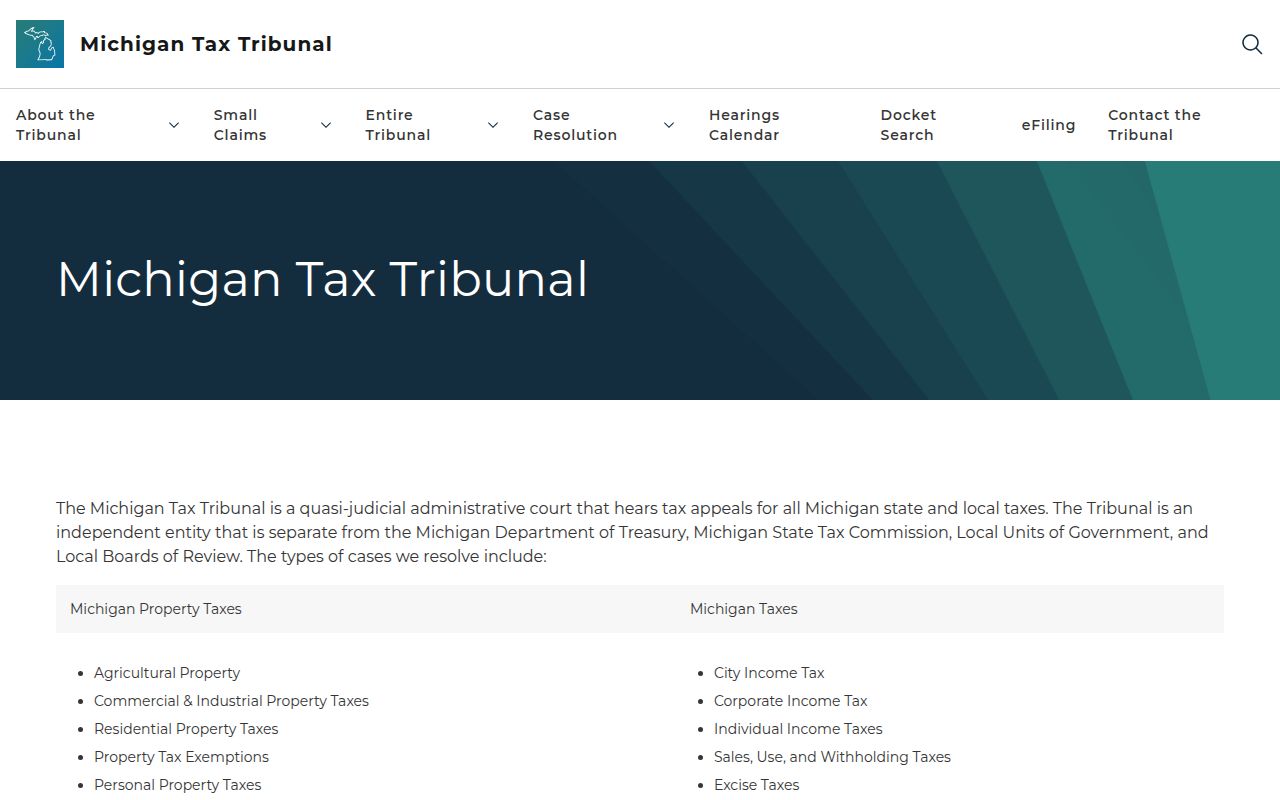
The MTT website has filing guides, petition forms, and instructions for both residential and commercial appeals.
A July Board of Review also meets for the limited purpose of correcting clerical errors. This is not a full appeal opportunity. It is for fixing mistakes like a wrong square footage or a missing exemption that should have been applied.
Note: Keep a copy of your assessment notice. The parcel number and prior year values on that notice are useful when you file a formal protest or appeal.
County Register of Deeds
Each of Michigan's 83 counties has a Register of Deeds office. This office records and stores deeds, mortgages, liens, plats, and other documents that affect real property ownership. Property tax records and deed records are separate systems, but they work together. When a property is sold, the buyer must file a Property Transfer Affidavit (Form L-4025) with the local assessor within 45 days of the transfer. The sale price helps the assessor reset the taxable value for the next tax year.
Recording fees in Michigan are standard across most counties. It costs $30 to record a document. Copies cost $1 per page. Certified copies are $5 per document. Some counties add small fees for certain document types. Many county Register of Deeds offices now offer online deed searches. Some use third-party systems like Fidlar Tapestry or Laredo, while others have built their own portals.
Deed records are public. Anyone can search them. In-person searches are free at most county offices. Online searches may require a small fee per document or a subscription. If you need a copy of a deed, you can order it in person, by mail, or in some counties, online.
State Resources for Michigan Property Tax Records
The Michigan Department of Treasury oversees property tax policy and provides resources for both property owners and assessors. The department's property tax page has guides on exemptions, assessments, and the appeal process. It also links to county resources. The State Tax Commission, which operates under the Treasury, certifies assessors and sets assessment standards. Assessors in Michigan must be licensed by the state and meet ongoing education requirements.
The state's Property Tax Estimator lets you calculate an estimated tax bill for any Michigan property. You enter the taxable value and the community's millage rate, and the tool gives you an estimate. This is helpful when you are comparing properties in different communities or planning for a purchase.
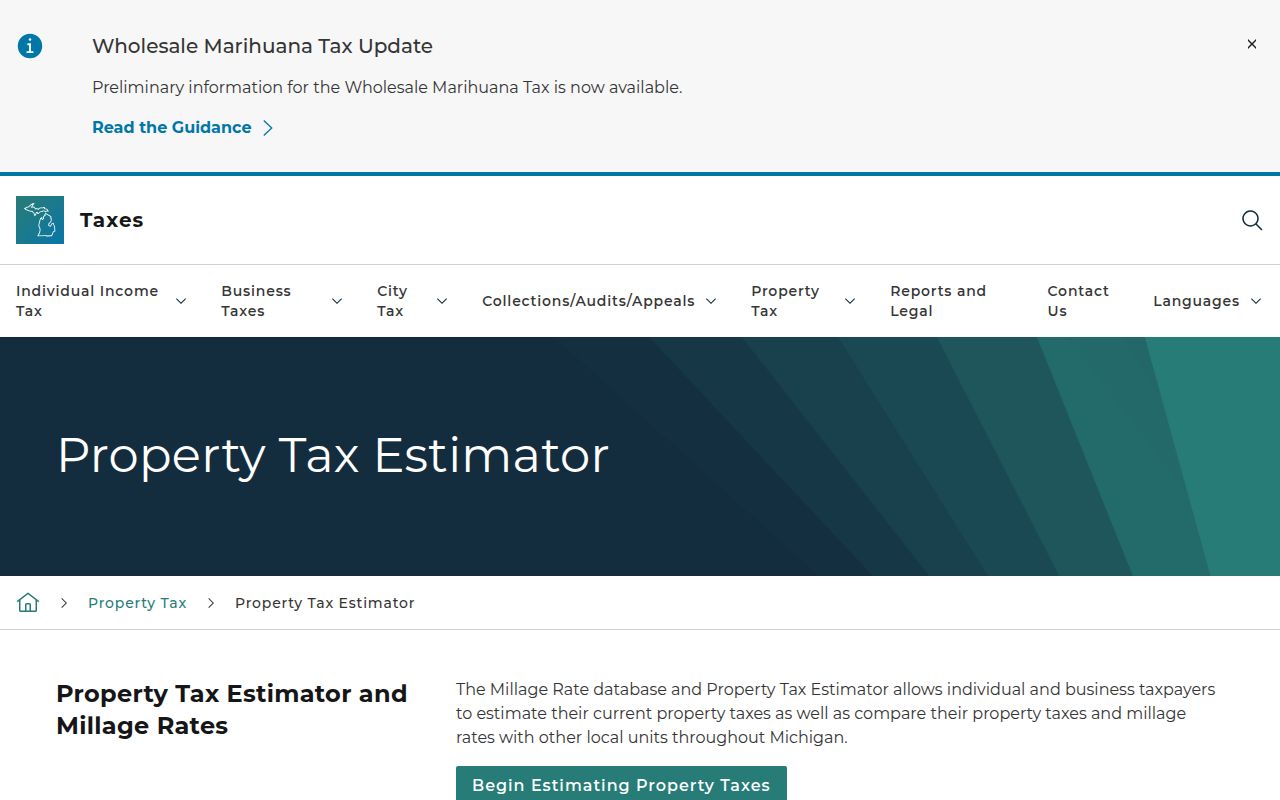
The estimator is free to use and does not require an account. Results are estimates only and may differ from your actual tax bill.
Common forms used in Michigan property tax matters include Form 2368 (PRE Affidavit), Form 5737 (Poverty Exemption Application), Form 4988 (Poverty Exemption Affidavit), Form 5739 (Affirmation of Ownership), and Form L-4025 (Property Transfer Affidavit). These forms are available from your local assessor, the county equalization office, or the Michigan Department of Treasury website.
Browse Michigan Property Tax Records by County
Each Michigan county has its own assessor, equalization office, and property tax search tools. Select a county below to find local contact info, search portals, and resources for property tax records in that area.
Property Tax Records in Major Michigan Cities
Residents of Michigan's major cities can access property tax records through their city assessor or the county portal. Select a city below to find local resources and search tools.