
Van Buren County Property Tax Records Search
Van Buren County property tax records are handled by the county Equalization Department in Paw Paw and are searchable online through the BS&A platform. Parcel data, assessed and taxable values, legal descriptions, and tax history are all available through the county's online portal. This guide explains how to search Van Buren County property tax records, covers the key county offices, and walks through the assessment, exemption, and appeal processes.
Van Buren County Overview
How to Search Van Buren County Property Tax Records
Van Buren County provides public online access to property tax records through the BS&A platform. You can search by owner name, parcel number, or property address and view assessed value, taxable value, legal description, tax history, and delinquent amounts for any parcel in the county. No account is needed for basic searches. The system covers all townships, cities, and villages in Van Buren County from a single interface.
The BS&A portal for Van Buren County is at bsaonline.com/?uid=7500. The portal includes tax, assessment, and delinquent search options and is updated regularly to reflect current data. This is the easiest way to get Van Buren County property tax records without visiting the county offices in Paw Paw.
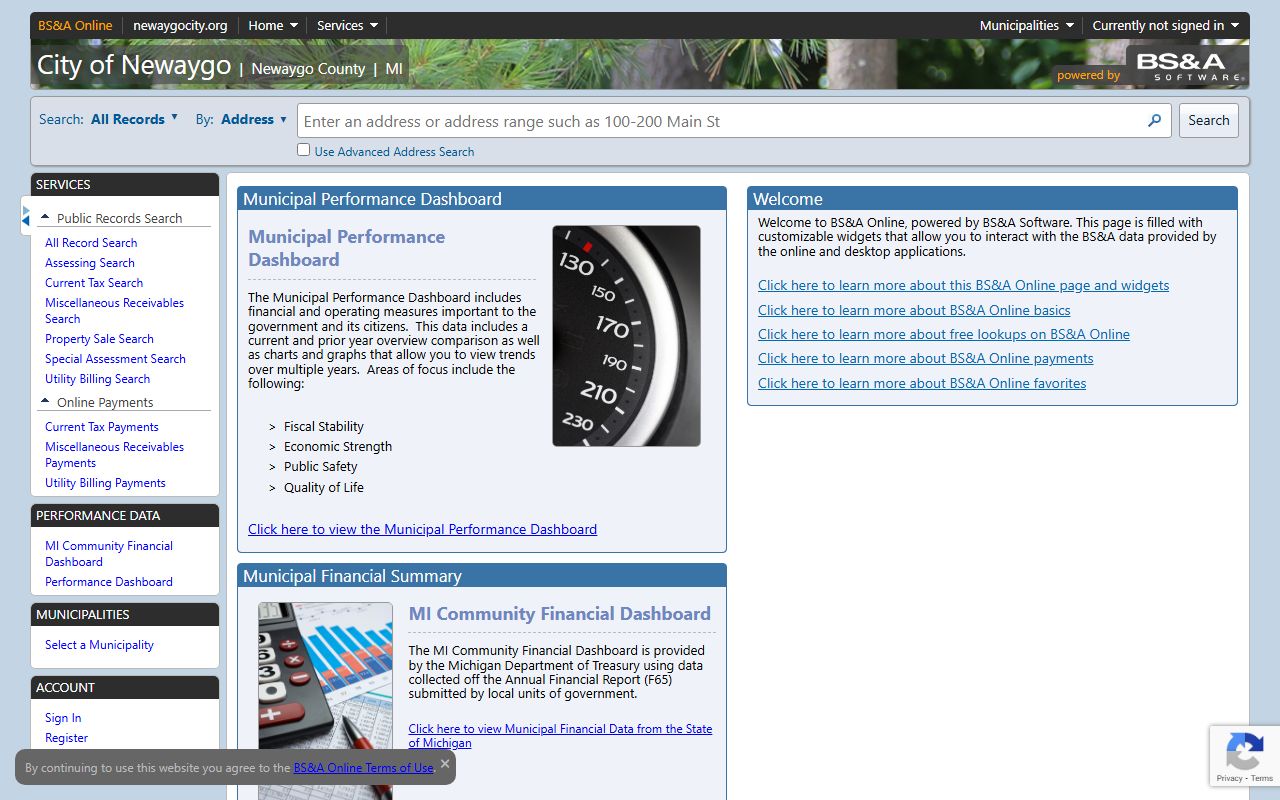
The screenshot below shows the Van Buren County BS&A property tax portal. Use it to look up any parcel in the county by address, owner name, or parcel ID.
For in-person help, the Equalization Department is at 212 Paw Paw St., Paw Paw, MI 49079. Call 269-657-8228 or visit the county equalization page at vanburencountymi.gov/departments/equalization.
Van Buren County Equalization Department
Director Peter W. McPherson oversees equalization for Van Buren County. Under MCL 211.1, all property in Michigan must be assessed at 50% of true cash value. McPherson's department reviews the assessment rolls from each township and city in the county, compares them to actual sales data, and applies equalization adjustments where needed. This annual process ensures that property is taxed consistently based on market value across the entire county.
The Equalization Department also reviews exemption applications, maintains the county parcel database, and provides GIS support through the county website. Records are public. If you have a question about your property's value, need to identify the right township assessor, or want to understand the equalization process in Van Buren County, contact the Equalization office at 212 Paw Paw St.
| Director | Peter W. McPherson |
|---|---|
| Address | 212 Paw Paw St., Paw Paw, MI 49079 |
| Phone | 269-657-8228 |
| Online Search | BS&A Online - Van Buren County |
| Department Page | vanburencountymi.gov/departments/equalization |
Van Buren County Register of Deeds
Register Andrea E. McGee records all real estate documents in Van Buren County. Deeds, mortgages, liens, land contracts, and easements are filed and maintained in this office. Recorded instruments establish the legal chain of ownership for every parcel in the county. When property sells, the new owner must file a Property Transfer Affidavit (Form L-4025) with the local assessor within 45 days of the transfer. This filing is required under Michigan law to trigger the taxable value uncapping process in the following tax year.
The Register of Deeds provides certified copies of recorded documents on request. Recording fees in Michigan are $30 per document, copies cost $1 per page, and certified copies are $5. The Register of Deeds is at 212 Paw Paw St., Paw Paw, MI 49079 and shares the same phone number as Equalization: 269-657-8228.
Note: Verifying ownership through the Register of Deeds before searching property tax records helps confirm who is currently responsible for taxes on a given parcel.
Property Tax Assessment in Van Buren County
Property in Van Buren County is assessed as of December 31 each year under MCL 211.30. Township assessors visit properties, set values, and issue assessment change notices each February. The Equalization Department reviews those values against recent sales and equalizes them where needed. Property owners who receive a notice should look it over and call the township assessor if anything looks off.
Michigan's taxable value cap limits annual tax increases for existing owners to the rate of inflation or 5%, whichever is less. This cap drops away when property changes hands. In the tax year following a sale, taxable value resets to equal the assessed value. Buyers in Van Buren County should plan for this shift. The Michigan Property Tax Estimator can help estimate what taxes will look like after the reset. Van Buren County's mix of agricultural, lakefront, and residential property means values can vary significantly depending on location and land use. The Michigan Treasury provides additional guidance on how assessment rules apply statewide.
Property Tax Exemptions in Van Buren County
Van Buren County homeowners can significantly reduce their school operating taxes by claiming the Principal Residence Exemption (PRE). Under MCL 211.7u, the PRE removes 18 mills from qualifying primary residences. File Form 2368 with the township assessor by June 1. Once applied, the exemption renews automatically each year you continue to occupy the property as your main home. There is no need to re-file unless your primary residence changes.
Agricultural property in Van Buren County may qualify for the Agricultural Exemption under MCL 211.7v. The county has significant farmland, vineyards, and orchards, and many agricultural operations qualify for this exemption. Contact the township assessor to confirm eligibility and what documentation is required.
Poverty Exemptions are available for lower-income homeowners who file Form 5737 and Form 4988 with the township assessor before the March Board of Review. Disabled veterans and surviving spouses may also qualify for additional exemptions under Michigan law. The Michigan Treasury outlines all available programs and eligibility requirements.
Appealing Your Van Buren County Assessment
Property owners in Van Buren County who disagree with their assessed value can appeal it. Start with the March Board of Review at the township level. You must file a written protest or appear in person before the Board's deadline. Bring evidence to support your position. A licensed appraisal, comparable sales data from similar parcels in the area, or documentation of property defects can strengthen your case. The Board of Review can reduce your assessed value if the evidence supports it.
If the Board of Review does not resolve the issue, the next step is the Michigan Tax Tribunal. The MTT handles statewide property tax appeals. Residential property owners must file by July 31 and commercial owners by May 31. The MTT's phone number is 517-335-9760. Your rights throughout the appeal process are protected by the Property Taxpayer's Bill of Rights, MCL 205.735.
Van Buren County Property Tax Payments
Treasurer Karen M. Russell manages delinquent property tax collections for Van Buren County. Local townships collect current-year taxes during summer and winter billing periods. Summer taxes are generally due in September and winter taxes in February. Individual township due dates can vary, so check with your local township treasurer for the exact dates that apply to your parcel.
When taxes go delinquent, they transfer to the County Treasurer in March. The Treasurer handles interest accrual, payment plans, and the forfeiture and foreclosure process. Contact Treasurer Russell at 269-657-8228 if you are behind on taxes or want to discuss your options. Addressing delinquent balances early limits total costs and keeps the property out of the foreclosure pipeline.
Note: Under Michigan law, properties with taxes unpaid for three or more years become eligible for county foreclosure. Contact the Treasurer's office as soon as possible if you have delinquent balances.
Cities in Van Buren County
Van Buren County includes communities such as South Haven, Paw Paw, Hartford, and Lawton. None of these municipalities meet the population threshold for individual city pages on this site. Property tax records for all areas in Van Buren County are available through the BS&A portal at bsaonline.com and the county Equalization Department at 212 Paw Paw St., Paw Paw.
Nearby Counties
Van Buren County borders these southwest Michigan counties. Each has its own equalization office and property records system. Verify which county holds a parcel near a county line before searching.