
Property Tax Records in Eaton County
Eaton County property tax records are held by the Equalization Department at the county building in Charlotte. The department maintains assessment data, parcel records, and equalized values for all taxable property in the county. You can search Eaton County property tax records online through the BS&A portal or contact the office to request records, check assessed values, or find out where to appeal your assessment.
Eaton County Overview
Eaton County Equalization Department
The Eaton County Equalization Department is the main source for property tax assessment records in the county. Director Jeremy A. Wheaton oversees the office at 517-543-4675. The department's job is to review assessed values set by local township and city assessors, then equalize them across the county so that all property is taxed at 50% of its true cash value, as required by Michigan law. Under MCL 211.1, all real and personal property in Michigan is subject to taxation, and the equalization process is how the state keeps the system fair.
Each February, Eaton County property owners receive assessment notices showing their property's assessed value, state equalized value, and taxable value. The taxable value is capped and increases slowly year to year under Proposal A, but it resets to the state equalized value when property transfers to a new owner. If you just bought a home in Eaton County, your first full tax year will show your taxable value jumping to match the assessed value, which often means a higher bill than the prior owner paid.
The office at 1045 Independence Blvd. in Charlotte handles all equalization work, parcel inquiries, and assessment-related questions. Staff can pull records for any parcel in the county and explain how your value was set.
| Department | Eaton County Equalization |
|---|---|
| Director | Jeremy A. Wheaton |
| Address | 1045 Independence Blvd., Charlotte, MI 48813 |
| Phone | 517-543-4675 |
Search Eaton County Property Records Online
The BS&A Online platform gives the public free access to Eaton County property tax records. You can search by owner name, address, or parcel ID. The system returns current and historical assessed values, taxable values, and tax bill amounts. It also shows property classifications, lot sizes, and building descriptions for most parcels in the county.
The Eaton County GIS portal provides an interactive map of all county parcels. The map at eatoncounty.org/134/GIS lets you search by location and view parcel boundaries, ownership, and zoning information. It is a useful companion to the BS&A system, especially if you are researching a parcel by location rather than by name or number.
The Eaton County BS&A portal gives public access to parcel assessment data and tax records for all properties in the county. The screenshot below shows the search interface at bsaonline.com.
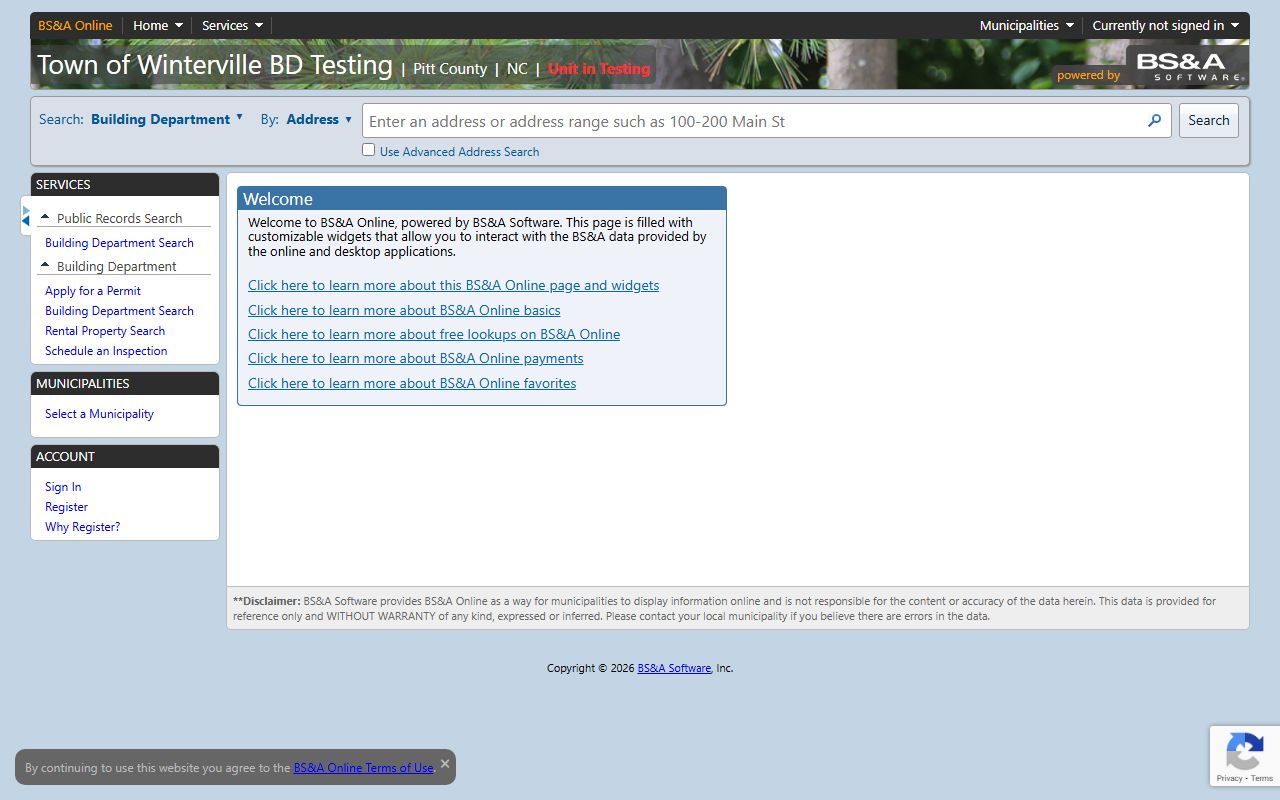
Search the BS&A portal to find assessed values, tax history, and parcel details for any property in Eaton County. No login is needed for basic searches.
Eaton County Treasurer and Tax Bills
The Eaton County Treasurer collects delinquent taxes and keeps records of unpaid tax bills across all townships and cities in the county. Treasurer Bob J. Robinson can be reached at 517-543-4074. Local township and city treasurers issue summer and winter tax bills. If those go unpaid by the deadline, the county treasurer takes over collection on March 1 of the following year.
Once a tax bill is delinquent with the county, interest begins to accrue. Delinquent records are public and show each parcel with unpaid taxes, the year the taxes became delinquent, and the total amount owed including interest. Buyers, lenders, and title companies often check delinquent tax records as part of any property transaction in Eaton County. If you want to know the tax status of a specific parcel, call the Treasurer's office or search through the BS&A portal, which often shows outstanding balances.
Register of Deeds
The Eaton County Register of Deeds records deeds, mortgages, liens, and other land instruments that affect property ownership. Register Diane E. Rohn can be reached at 517-543-4680. Every transfer of property in Eaton County results in a recorded deed, which becomes a public record at this office. These records are a key part of any property title search.
Standard recording fees in Michigan are $30 per document. Copies of recorded documents cost $1 per page. Certified copies are $5. Under MCL 211.30, the status of any property on December 31 is what determines its assessed classification and value for the coming tax year. When a property sells, the buyer must file Form L-4025, the Property Transfer Affidavit, with the local assessor within 45 days. This step is required and triggers the taxable value to uncap to the current state equalized value, which often increases the property tax bill going forward.
Exemptions and Appeals in Eaton County
The Principal Residence Exemption is the most widely used property tax break in Eaton County. If the home is your primary residence on December 31, you can exempt it from up to 18 mills of local school operating taxes. File Form 2368 with your local township or city assessor. This exemption is covered by MCL 211.7u and stays active year to year as long as you own and live in the property.
Farmland in Eaton County may qualify for the agricultural exemption under MCL 211.7v. Qualified agricultural property is assessed at 50% of its true cash value, which can make a meaningful difference on large rural parcels. The Equalization Department can confirm whether your parcel is classified as agricultural and whether it qualifies for the exemption.
If you think your assessed value is wrong, you can protest at the March Board of Review. Most townships and the city of Charlotte hold Board of Review sessions in mid-March. Bring comparable sales data or other evidence that supports a lower value. If the board does not resolve it to your satisfaction, you can petition the Michigan Tax Tribunal at 517-335-9760. Residential cases must reach the MTT by July 31. Commercial and industrial cases must be filed by May 31. Under MCL 205.735, you have the right to a full and fair hearing on your assessment.
Qualifying low-income homeowners can apply for a poverty exemption using Form 5737 and Form 4988. The application goes to your local assessor each year. More details on all Michigan property tax exemptions are available at the Michigan Department of Treasury.
State Property Tax Tools
Eaton County property owners can use the Michigan Department of Treasury's property tax estimator to get an idea of what they owe based on their assessed value and local millage rates. This tool is useful when buying a property or planning for the next tax cycle. It does not replace the official bill but gives a close approximation.
The state's full property tax information page covers assessment rules, appeals, exemptions, and delinquency procedures that apply in Eaton County and across all of Michigan. If your tax situation is complex or involves multiple parcels, consulting a licensed Michigan tax professional is a good idea.
Nearby Counties
Eaton County borders several mid-Michigan counties. If a property is near a county line, check which county the parcel falls in before requesting records.