
Search Ingham County Property Tax Records
Ingham County property tax records are maintained by the County Equalization Department at 341 S. Jefferson St. in Mason. Residents, buyers, and researchers can search parcel data, assessed values, and tax history through the county's BS&A Online portal. The Equalization Department oversees records for all townships and cities in the county, including Lansing. Whether you need current tax bills, past assessment data, or deed information, this guide covers the main ways to find what you need in Ingham County without driving to the courthouse.
Ingham County Overview
How to Search Ingham County Property Tax Records
Ingham County uses the BS&A Online platform to provide public access to property tax data. You can search by owner name, parcel number, or street address. The portal returns assessed values, taxable values, tax history, and current amounts owed for each parcel. All townships and cities within Ingham County are covered in one search. No account is required for a basic lookup.
The Ingham County BS&A Online property search is the fastest way to find records without going to the office. Once you locate a parcel, the portal shows the current owner of record, the legal description, the last sale date, and the breakdown of taxes by unit. You can also view delinquent tax status if taxes have been forwarded to the county treasurer. This is especially useful for buyers doing due diligence on a property before closing.
The Ingham County Equalization Department also maintains a GIS mapping tool at ingham.org that lets you view parcel boundaries on a map. This is a good supplement to the BS&A search if you want to see the property layout or confirm lot lines before requesting official documents.
The screenshot below shows the BS&A Online portal for Ingham County. This is the primary search tool for property tax records, assessed values, and tax payment history across the county.
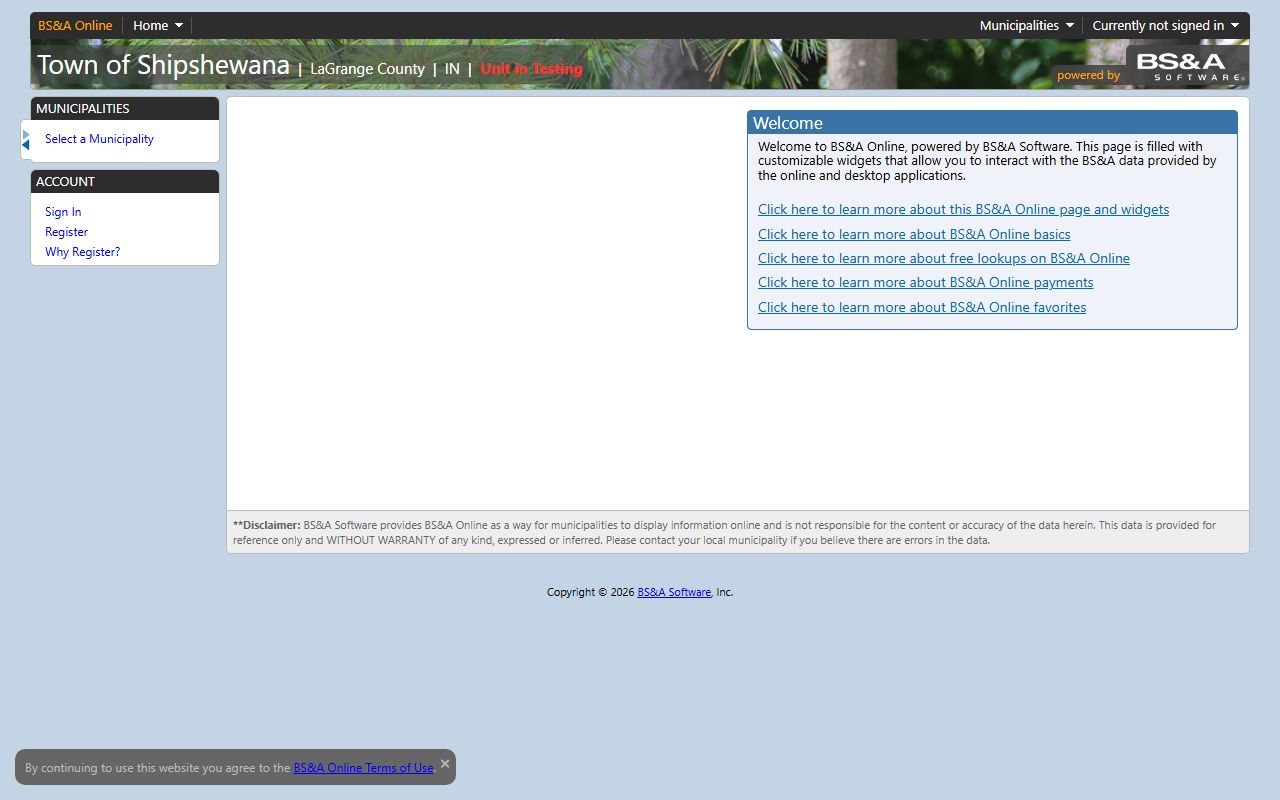
The portal is updated by the county throughout the tax year to reflect current bill and payment data.
Ingham County Equalization Department
The Equalization Department is the lead office for property tax records in Ingham County. Director Thomas J. Barnhardt oversees the annual equalization process that sets county-equalized values for all real and personal property. Under MCL 211.1 et seq., Michigan requires all property to be assessed at 50% of its true cash value. The Ingham County Equalization Department reviews township and city assessments each year to ensure compliance with this state standard.
This office also processes exemption applications, maintains the countywide property database, and handles special assessment rolls. If you need records not available through BS&A Online, staff at the Equalization office can pull them during regular business hours. Most records are public under the Michigan Freedom of Information Act.
| Office | Ingham County Equalization Department |
|---|---|
| Director | Thomas J. Barnhardt |
| Address | 341 S. Jefferson St., Mason, MI 48854 |
| Phone | 517-676-7210 |
| Online Search | BS&A Online - Ingham County |
The county treasurer's website at tr.ingham.org provides additional information on tax billing, delinquency status, and payment options. Treasurer Eric C. Schertzing handles delinquent collections and tax foreclosure for the county. Contact the treasurer at 517-676-7233 with payment questions.
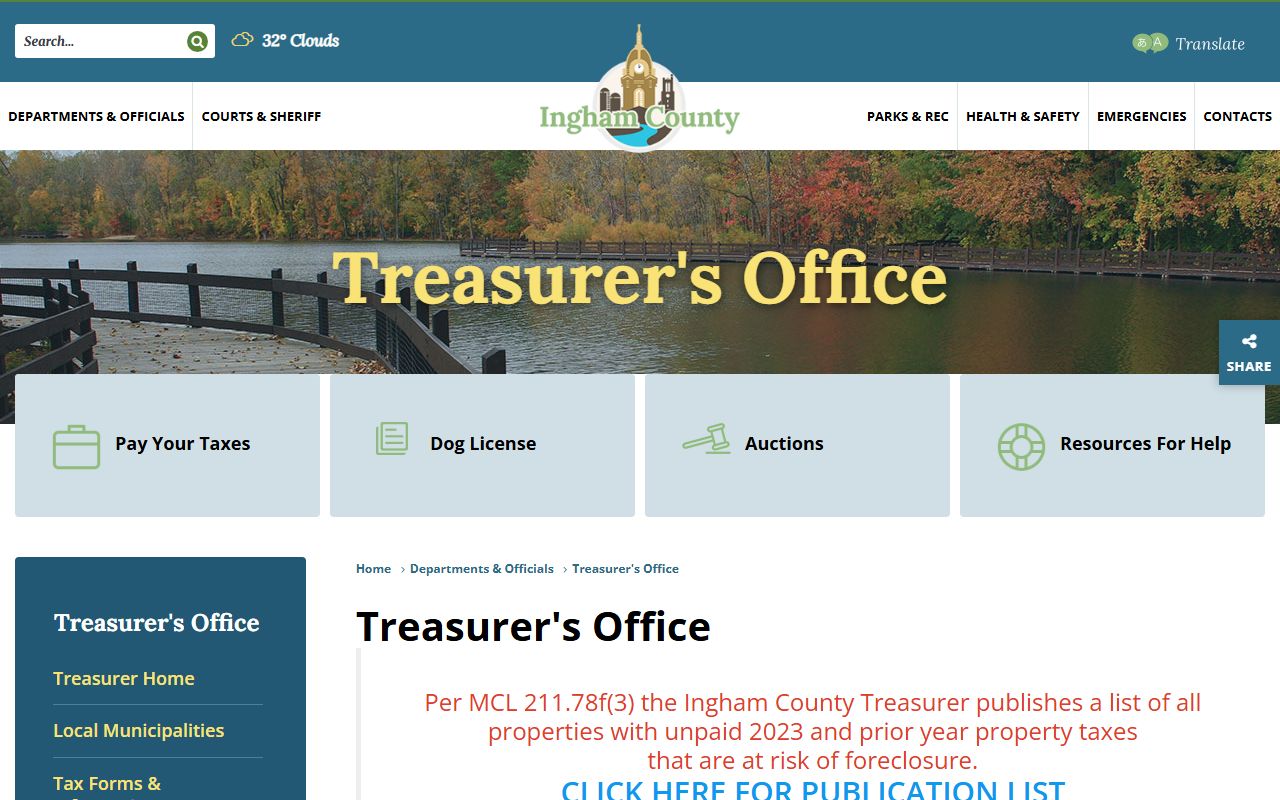
The treasurer's portal linked above shows payment status and delinquency records for properties across Ingham County.
Ingham County Register of Deeds
The Register of Deeds records all real estate documents in Ingham County. This office is responsible for deeds, mortgages, liens, easements, and other instruments that affect title to real property. Register Carolyn A. Henry oversees the recording process and maintains the official real estate record for the county. The office is located at the same address as the Equalization Department at 341 S. Jefferson St. in Mason.
You can search recorded documents online through the county's property and land records system at ingham.org. When a property changes hands, the buyer must file a Property Transfer Affidavit (Form L-4025) with the local assessor within 45 days of the transfer. Missing this deadline can delay the uncapping of taxable value and cause assessment errors. The Register of Deeds phone number is 517-676-7240. The standard recording fee in Michigan is $30 per document, and copies are $1 per page.
Note: Filing the Property Transfer Affidavit on time is required under Michigan law and helps ensure your taxable value is properly reset after a sale.
Property Tax Assessment in Ingham County
Property in Ingham County is assessed as of December 31 each year, which is Michigan's Tax Day under MCL 211.30. Local township and city assessors set values for each parcel, and the Ingham County Equalization Department reviews those values to confirm they meet the 50% of true cash value standard. Assessment notices are mailed in February. Ingham County includes urban areas like Lansing and East Lansing alongside more rural townships, so assessed values vary considerably across the county.
Michigan's taxable value cap is a key feature of the state's property tax system. Taxable value increases each year by the lesser of 5% or the rate of inflation, regardless of how much the market value has grown. When a property sells or ownership changes, the taxable value uncaps and resets to the assessed value in the next tax year. For buyers in Lansing and other higher-value areas of Ingham County, this reset can mean a notable jump in taxes. Use the Michigan Property Tax Estimator to model what taxes will look like after a purchase. The Michigan Treasury offers additional guidance on how assessments work statewide.
Township assessors across Ingham County apply state rules to individual parcels. Ingham County townships include Alaiedon, Aurelius, Delhi, Leroy, Leslie, Locke, Meridian, Onondaga, Stockbridge, Vevay, Wheatfield, White Oak, Williamstown, and Ingham Township itself. Each township has a local assessor who sets values subject to county review.
Property Tax Exemptions in Ingham County
The most commonly used exemption in Ingham County is the Principal Residence Exemption (PRE). Under MCL 211.7u, owners who occupy a property as their primary home can claim a PRE that removes 18 mills from the school operating tax. File Form 2368 with your local township or city assessor by June 1. If you miss the June deadline, you can still file by November 1 for partial-year savings. The PRE is one of the most valuable exemptions available and can save homeowners hundreds of dollars each year.
Agricultural property may qualify for exemption under MCL 211.7v. Qualifying farm operations in Ingham County's rural townships can see meaningful reductions. The poverty exemption is available for low-income homeowners who meet income and asset tests set by their local Board of Review. File Forms 5737 and 4988 with your township assessor before the March Board of Review. Veteran exemptions apply to disabled veterans and their surviving spouses.
Appealing Your Ingham County Assessment
If you believe your Ingham County property is overassessed, you can appeal. The process starts at the local March Board of Review, which convenes each March in your township or city. You must file a written protest or appear in person before the board's deadline. Supporting evidence matters. Bring a recent appraisal, comparable sales data, or photos showing issues with the property's condition. The board can adjust your assessment if the evidence supports it.
If the Board of Review does not resolve your concern, the next step is the Michigan Tax Tribunal. The MTT hears property tax disputes statewide. For residential property, the filing deadline is July 31. For commercial and industrial property, it is May 31. You can reach the MTT at 517-335-9760. The Property Taxpayer's Bill of Rights under MCL 205.735 outlines your rights at each stage of the appeal process. Many Ingham County homeowners successfully reduce their assessments at the Board of Review without needing to go to the MTT.
Note: Gather comparable sales and assessment data from the BS&A portal before your Board of Review hearing to support your case.
Ingham County Property Tax Payments
Summer property taxes in Ingham County are typically billed in July and due in September. Winter taxes are billed in December and due in February, though exact due dates depend on your local township or city. Contact your local unit of government for your specific billing schedule. Pay summer taxes to your local township or city treasurer first. After the local collection period, unpaid taxes are turned over to the Ingham County Treasurer.
Once taxes go delinquent and are forwarded to the county, the Ingham County Treasurer takes over collection. Treasurer Eric C. Schertzing manages delinquent accounts, payment plans, and the forfeiture and foreclosure process for the county. Delinquent taxes in Michigan accrue interest and penalties at a set rate, so it is better to address them quickly. Call the Treasurer at 517-676-7233 or visit the treasurer's website at tr.ingham.org for current delinquency status and payment options.
Cities in Ingham County
Ingham County includes Lansing, the state capital, as well as East Lansing, Mason, and several smaller communities. Lansing is the largest city in the county and the only one that qualifies for its own property tax records page based on population.
Nearby Counties
These counties border Ingham County. Each has its own equalization office and property tax search system. If a parcel is near a county line, confirm which county it falls in before searching.