
Iron County Property Tax Records
Iron County property tax records are managed by the County Equalization Department at 2 S. 6th St. in Crystal Falls, in Michigan's Upper Peninsula. Residents, buyers, and researchers can search parcel data, assessed values, and tax history through the county's BS&A Online portal. The Equalization Department covers all townships and communities in the county. This guide explains how to find Iron County property tax records, what to expect from each county office, and how to challenge an assessment if you think your values are off.
Iron County Overview
How to Search Iron County Property Tax Records
Iron County uses the BS&A Online platform for public access to property tax records. The portal lets you search by owner name, address, or parcel number. No account is needed for basic lookups. Results show the current owner, assessed value, taxable value, and tax history for each parcel. All townships in Iron County are covered in one search.
Go to the Iron County BS&A Online property search to start a parcel lookup. The portal is updated throughout the tax year and shows current bill and payment status. If you know the parcel ID from a deed or prior tax bill, entering it directly gives the fastest results. Owner name and address searches also work well for most common lookups. This is the primary tool for finding Iron County property tax records without going to the courthouse in Crystal Falls.
Iron County has limited online GIS mapping compared to some lower-peninsula counties. If you need parcel boundary information or spatial data, contact the Equalization Department at 906-265-3821. Staff can assist with requests that go beyond what the online portal provides. In-person visits to the office at 2 S. 6th St. in Crystal Falls are also an option during regular business hours.
The screenshot below shows the BS&A Online search portal used by Iron County for public access to property tax records and parcel assessments across the county.
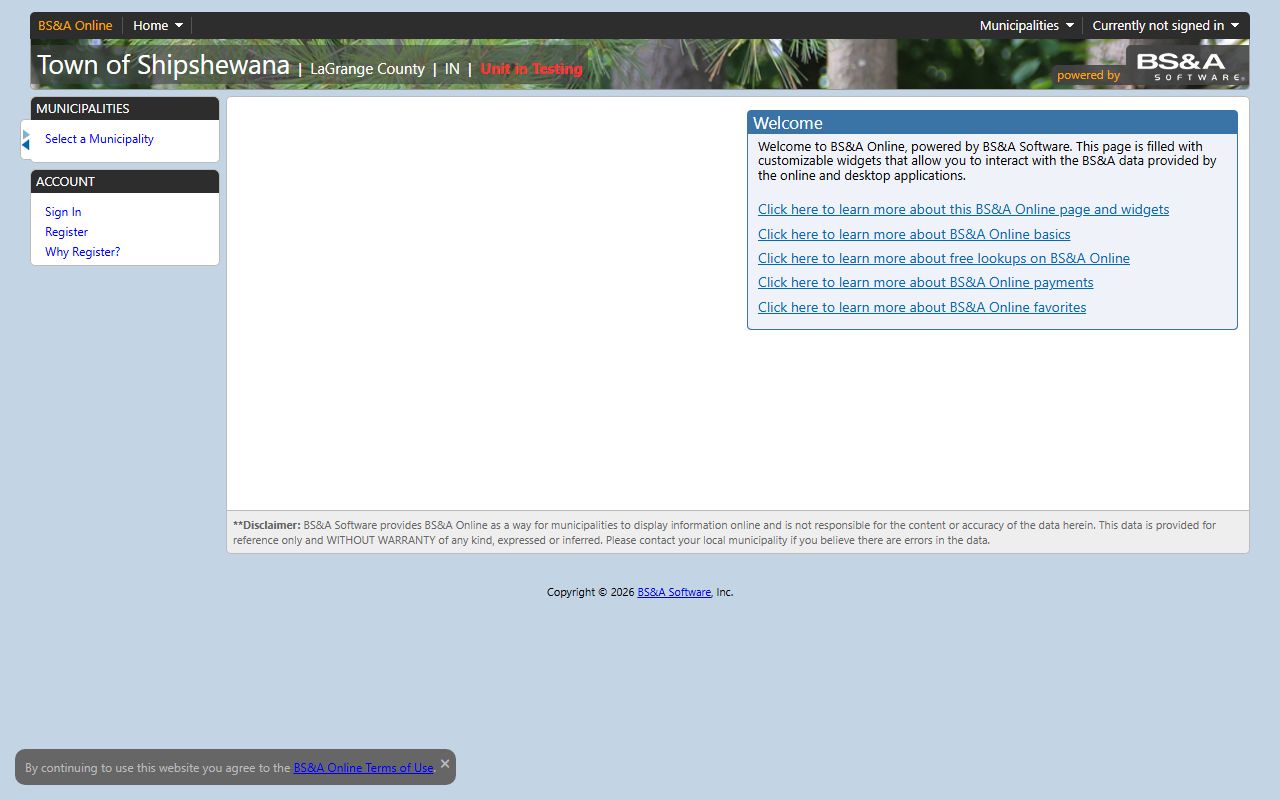
The portal is maintained by the county and reflects current assessment and tax data for all Iron County parcels.
Iron County Equalization Department
The Equalization Department is the lead office for property valuation and tax records in Iron County. Director Julie A. Stephenson oversees the annual equalization process that ensures township assessments meet the 50% of true cash value standard required under MCL 211.1 et seq. Each year, local township assessors set values and the county reviews them for accuracy and consistency with state law. Iron County is a rural Upper Peninsula county with a mix of residential, forested, and recreational parcels, and the Equalization Department applies state rules uniformly across all of them.
The office maintains the countywide property database and processes exemption requests. Most records are public and available during regular business hours. If you have a question about your assessment or want to check exemption eligibility, start with this office.
| Office | Iron County Equalization Department |
|---|---|
| Director | Julie A. Stephenson |
| Address | 2 S. 6th St., Crystal Falls, MI 49920 |
| Phone | 906-265-3821 |
| Online Search | BS&A Online - Iron County |
Iron County Register of Deeds
The Iron County Register of Deeds records all real estate documents filed in the county. This includes deeds, mortgages, liens, easements, and other instruments that affect property title or ownership. Register James R. Hoops manages the recording process. The office is at 2 S. 6th St. in Crystal Falls, the same building as the Equalization Department. Reach the Register at 906-875-3324 for document requests or questions about recorded instruments.
When a property transfers, the new owner must file a Property Transfer Affidavit (Form L-4025) with the local township assessor within 45 days. This filing triggers the uncapping of taxable value as required by Michigan law. Missing the deadline can create errors in the assessment and delay the reset. The standard recording fee in Michigan is $30 per document. Copies of recorded documents are $1 per page, and certified copies are $5. Use the Register of Deeds alongside the BS&A portal to get a full picture of a property's ownership and tax history in Iron County.
Note: Always file the Property Transfer Affidavit with the local township assessor within 45 days of closing to ensure proper tax treatment in the following year.
Property Tax Assessment in Iron County
Property in Iron County is assessed each year as of December 31, Michigan's Tax Day under MCL 211.30. Township assessors set values for each parcel, and the County Equalization Department reviews those values to confirm they meet the 50% of true cash value standard. Assessment notices go out in February. Iron County's parcels include residential homes, recreational properties, timberland, and undeveloped lots, and assessed values reflect market conditions in this rural Upper Peninsula region.
Michigan's taxable value cap protects long-time owners from rapid tax increases. Taxable value rises by no more than the rate of inflation or 5%, whichever is lower, each year. But when a property is sold or transferred, the taxable value uncaps and resets to the assessed value in the next tax year. For buyers of recreational land or cabins in Iron County, this reset can mean a noticeable jump in the annual tax bill. The Michigan Property Tax Estimator can help buyers understand what to expect after purchase. The Michigan Treasury provides additional guidance on how the state's assessment system works and what rights property owners have.
Property Tax Exemptions in Iron County
Iron County property owners can apply for several exemptions to lower their annual tax bill. The Principal Residence Exemption (PRE) is the most common. Under MCL 211.7u, owners who use a property as their primary home can remove 18 mills of school operating tax from their bill. File Form 2368 with your local township assessor by June 1. Missing the June deadline does not end your chances; a November 1 filing still provides partial-year savings. The PRE is available throughout Iron County and can produce meaningful annual savings for qualifying homeowners.
Qualifying agricultural property may be eligible for an exemption under MCL 211.7v. The poverty exemption is available for low-income homeowners who pass income and asset tests set by the local Board of Review. Submit Forms 5737 and 4988 before the March Board of Review. Disabled veterans and their surviving spouses may qualify for additional reductions under Michigan law. Contact the Iron County Equalization Department at 906-265-3821 to learn which exemptions apply to your parcel.
Appealing Your Iron County Assessment
If you believe your Iron County property is assessed above 50% of its true cash value, you can appeal. The process starts at the March Board of Review in your local township. The board meets each year to hear assessment protests. You can appear in person or file a written protest before the board's deadline. Bring documentation to support a lower value, such as a recent comparable sale, a professional appraisal, or evidence of physical problems with the property. The board has authority to lower your assessment if the evidence warrants it.
If the Board of Review does not resolve your issue, you can petition the Michigan Tax Tribunal. The MTT handles property tax appeals from all 83 Michigan counties. For residential property, the filing deadline is July 31. For commercial property, it is May 31. Reach the MTT at 517-335-9760. The Property Taxpayer's Bill of Rights under MCL 205.735 spells out your rights at each stage. Many Iron County owners successfully resolve issues at the Board of Review level without needing to go further.
Note: Pull comparable parcel data from the BS&A portal before your hearing to show how nearby properties are assessed relative to yours.
Iron County Property Tax Payments
Property taxes in Iron County follow the standard Michigan two-cycle billing system. Summer taxes are billed in July and typically due in September. Winter taxes are billed in December and due in February. Exact deadlines can vary by township, so check with your local treasurer for precise dates. Pay your bills to the local township treasurer during the collection window to avoid interest and penalties.
After taxes go delinquent, they are forwarded to the Iron County Treasurer. Treasurer Jill M. Maki handles delinquent accounts, payment arrangements, and the forfeiture and foreclosure process for the county. Reach the Treasurer at 906-875-3361 for delinquent tax balances or to set up a payment plan. In Michigan, delinquent property taxes accrue interest from the date of delinquency, and properties can be forfeited to the county after two years of nonpayment. Addressing delinquency early reduces the total owed and avoids the risk of losing the property through foreclosure.
Cities in Iron County
Iron County includes the city of Iron River and the city of Crystal Falls, as well as several townships and small communities. None of these municipalities meet the population threshold for individual property tax records pages. Property tax records for all areas in Iron County are available through the Equalization Department and the BS&A Online portal.
Nearby Counties
These Upper Peninsula counties border Iron County. Each has its own equalization office and property records system. Confirm which county a parcel falls in before searching, especially for properties near county boundaries.