
Find Property Tax Records in Lake County
Lake County property tax records are managed by the County Equalization Department in Baldwin. The office maintains parcel data, assessed values, and tax history for all townships in the county. Residents and researchers can search Lake County property tax records through the BS&A online portal without visiting the office in person. This guide covers how to search, who to contact, how assessments work, and what to do if you want to appeal your property value.
Lake County Overview
How to Search Lake County Property Tax Records
Lake County uses the BS&A Online platform to give the public access to property tax data. The system lets you search parcels by owner name, address, or parcel number. Results show assessed values, taxable values, and tax history going back several years. The portal covers all townships in Lake County, so one search covers the entire county.
To start an online search, visit the Lake County BS&A property tax portal. No account is needed for basic lookups. Type a name, address, or parcel ID in the search box and review the results. Each record shows the current owner, legal description, assessed value, and payment history. This is the most direct way to find Lake County property tax records without a trip to Baldwin.
The screenshot below shows the BS&A online search portal that Lake County uses for property tax records. The Lake County Equalization BS&A portal is updated regularly to reflect current assessment data.
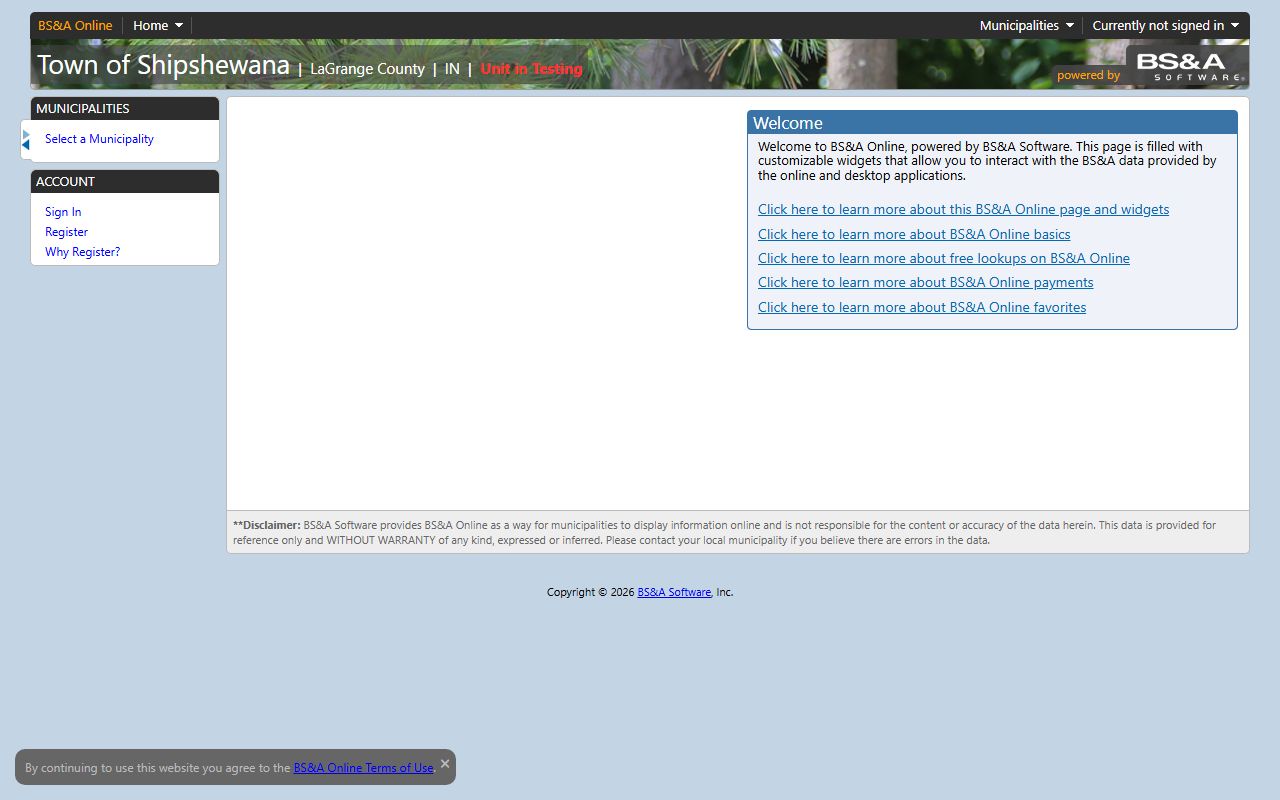
The portal provides current-year tax data as well as historical records. If you need documents not available online, contact the Equalization office directly at 231-745-4646. Staff at 800 10th St. in Baldwin can assist with parcel lookups and answer questions about specific properties.
Lake County Equalization Department
The Equalization Department is the primary office for property assessment records in Lake County. Director Donald R. Tanner manages the annual equalization process that establishes assessed values across all local units. Under MCL 211.1, all Michigan property must be assessed at 50% of its true cash value. The Lake County Equalization Department checks township assessments each year and makes adjustments when those values fall out of line with that standard.
The office keeps records of all parcels in the county, including ownership data, exemption status, and special assessment rolls. If you have a question about your assessment or think there may be an error in your parcel record, the Equalization Department is the place to start. Most records are public and can be viewed during business hours at the Baldwin office.
| Office | Lake County Equalization Department |
|---|---|
| Director | Donald R. Tanner |
| Address | 800 10th St., Baldwin, MI 49304 |
| Phone | 231-745-4646 |
| Online Search | BS&A Online - Lake County |
Lake County Register of Deeds
The Register of Deeds records real estate instruments in Lake County. This includes deeds, mortgages, land contracts, and liens. When property changes hands, the buyer must file a Property Transfer Affidavit (Form L-4025) with the local township assessor within 45 days of the transfer date. The Register of Deeds can confirm that a document has been recorded and provide copies of recorded instruments.
Recorded documents at the Register of Deeds link directly to tax records, since ownership changes affect how a parcel is assessed going forward. The standard recording fee in Michigan is $30 per document. Copies cost $1 per page and certified copies are $5. Contact Register of Deeds Cindy L. Wilson at 231-745-4738 with questions about recorded documents in Lake County.
Note: Filing the Property Transfer Affidavit on time ensures your property is uncapped correctly after a transfer under Michigan assessment rules.
Property Tax Assessment in Lake County
Lake County property is assessed as of December 31, which is Michigan's Tax Day under MCL 211.30. Township assessors set values for each parcel, and the County Equalization Department reviews those values to confirm they meet the 50% of true cash value standard. Assessment notices go out in February of each year.
Michigan caps the annual increase in taxable value at the rate of inflation or 5%, whichever is lower, so long as ownership does not change. When a property transfers, the taxable value uncaps and resets to the assessed value in the following tax year. This can mean a significant jump in taxes for a new owner. Buyers in Lake County should use the Michigan Property Tax Estimator on the state Treasury website to get a realistic picture of what taxes will look like after closing.
The Michigan Department of Treasury publishes statewide rules and guidance for property tax assessment. Lake County township assessors apply those rules to parcels throughout the county, including in Chase Township, Cherry Valley, Dover, Eden, Elk, Ellsworth, Lake, Newkirk, Sauble, and other local units.
Property Tax Exemptions in Lake County
The Principal Residence Exemption (PRE) is the most common tax break for homeowners in Lake County. Under MCL 211.7u, the PRE removes 18 mills from the school operating portion of your tax bill. To claim it, file Form 2368 with your local township assessor by June 1. You must use the property as your primary home. The savings add up fast, especially in townships with high millage rates.
Agricultural land may qualify for an exemption under MCL 211.7v. Lake County has a mix of farmland and forested parcels that can meet the definition of agricultural property under state law. Qualifying operations can see meaningful reductions in their tax bills. Contact the Equalization Department or your township assessor to review eligibility for the agricultural exemption.
Low-income homeowners can apply for a Poverty Exemption by filing Form 5737 and Form 4988 with their township assessor. The local Board of Review rules on poverty exemption requests each March. Veteran exemptions are also available for disabled veterans and surviving spouses under Michigan law. Ask the Equalization Department about which exemptions apply to your situation.
Appealing Your Lake County Assessment
If you believe your property is overassessed in Lake County, you can appeal. The first step is the March Board of Review, which meets each year to hear assessment protests. You can appear in person or submit a written protest before the township deadline. Bring solid evidence of value, such as a recent appraisal or sales data from nearby comparable properties.
If the Board of Review does not resolve your concern, you can take your appeal to the Michigan Tax Tribunal in Lansing. Call the MTT at 517-335-9760 for filing information. Residential property appeals must be filed by July 31. Commercial property appeals are due by May 31. The Property Taxpayer's Bill of Rights under MCL 205.735 spells out your rights at each step of the process.
Lake County Property Tax Payments
The Lake County Treasurer collects delinquent property taxes after local townships forward unpaid amounts. Summer taxes are generally due in September and winter taxes in February, but exact due dates depend on your township. Check with your local township treasurer for deadlines specific to your parcel.
Once taxes become delinquent, they transfer to the County Treasurer. Treasurer Gloria J. Sawyer can be reached at 231-745-4626. The Treasurer's office handles delinquent collections, payment plans, and properties that have entered forfeiture. Addressing delinquent taxes promptly limits the fees and interest that accumulate under Michigan law. Failure to pay can result in forfeiture and, eventually, foreclosure by the county.
Note: Delinquent property taxes in Michigan accrue interest and penalties, so contacting the Treasurer early gives you the best options for resolving the balance.
Cities in Lake County
Lake County is rural, with Baldwin as the county seat. Other communities include Chase, Luther, and Idlewild. None of these municipalities meet the population threshold for individual city pages on this site. Property tax records for all communities in Lake County are managed through the Equalization Department and the BS&A online portal.
Nearby Counties
These counties border Lake County. Each has its own equalization office and property tax records system. If a parcel is near a county line, confirm which county it falls in before you search.