
Find Property Tax Records in Missaukee County
Missaukee County property tax records are managed by the County Equalization Department at 111 S. Canal Street in Lake City. Property owners, buyers, and researchers can look up parcel data, assessed values, and tax history using the BS&A online portal. The Equalization office holds records for all townships in this rural north Michigan county. This page explains how to search records, which offices to contact, and what to expect from the assessment and appeal process in Missaukee County.
Missaukee County Overview
Searching Missaukee County Property Tax Records
Missaukee County uses the BS&A Online system to provide public access to property tax data. The platform covers all townships in the county and lets users search by owner name, parcel number, or street address. Search results display current ownership, legal descriptions, assessed and taxable values, and tax payment records. You can search from anywhere with internet access without needing to visit the courthouse.
To begin, go to the Missaukee County BS&A property search portal. No account or login is required for basic lookups. Enter what you know and the system returns matching parcels right away. This is useful for buyers checking a property before closing, owners reviewing their own assessments, or researchers tracking land ownership over time.
The screenshot below shows the BS&A online search interface used by Missaukee County. It is the primary tool for finding property tax records in the county without a trip to Lake City.
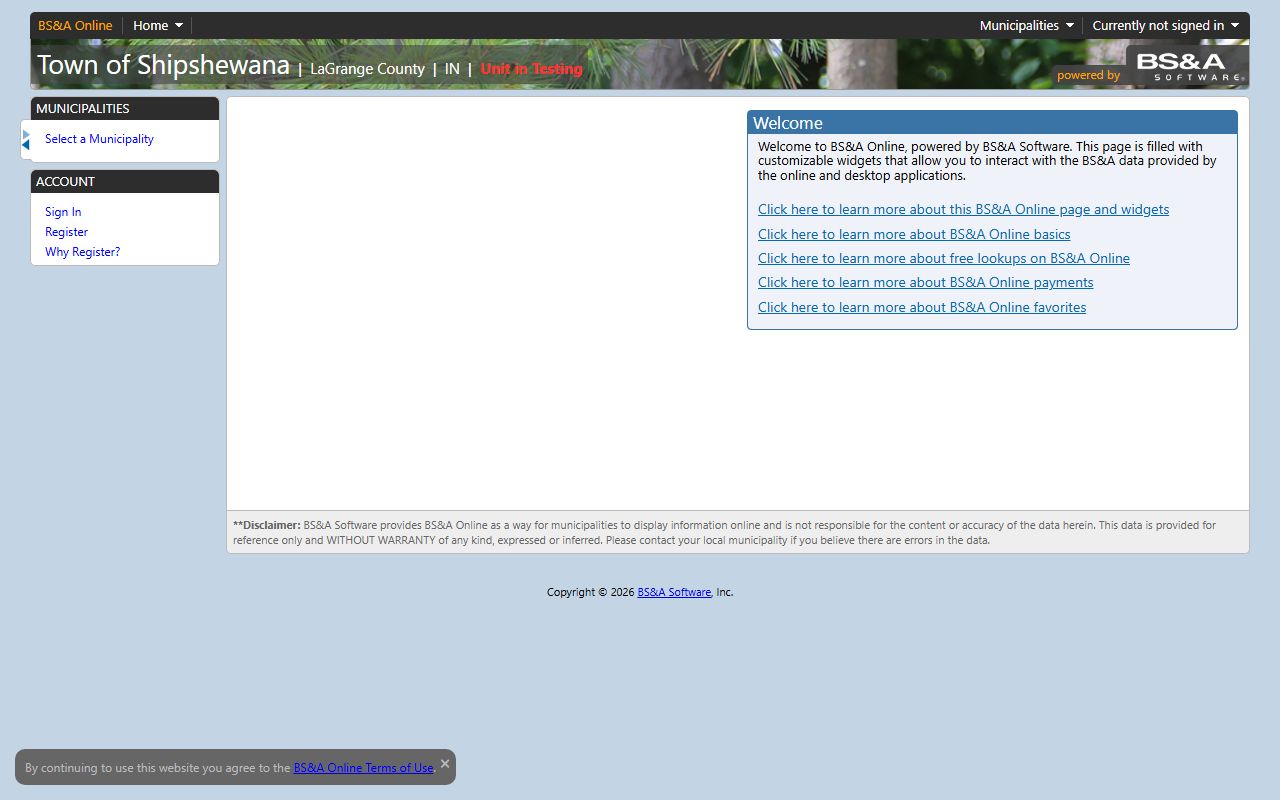
The portal data is kept current by the county and reflects the most recent assessment year information available for Missaukee County parcels.
In-person searches are available at 111 S. Canal St. in Lake City. Director Michael D. Monton's office can assist with records that don't appear online or questions about specific parcels. Call 231-839-4966 before visiting to confirm hours and what to bring.
Missaukee County Equalization Department
The Equalization Department is the central office for property assessment data in Missaukee County. Director Michael D. Monton oversees the annual process of reviewing and certifying property values for all real and personal property in the county. Under MCL 211.1 et seq., Michigan requires all property to be assessed at 50% of its true cash value. The Equalization Department checks township-level assessments each year to verify they comply with this standard.
Beyond assessments, the office handles exemption applications, special assessment rolls, and maintains the county's parcel data. Records held by the Equalization Department are public and available during business hours.
| Office | Missaukee County Equalization Department |
|---|---|
| Director | Michael D. Monton |
| Address | 111 S. Canal St., Lake City, MI 49651 |
| Phone | 231-839-4966 |
| Online Search | BS&A Online - Missaukee County |
Missaukee County Register of Deeds
The Register of Deeds records all real estate instruments in Missaukee County, including deeds, mortgages, liens, and other documents that affect title to property. Register of Deeds Nancy A. Waters can be reached at 231-839-4961. Her office is located in Lake City at the same county complex as the other county departments.
When a property transfers ownership, the new owner must file a Property Transfer Affidavit (Form L-4025) with the local assessor within 45 days of the transfer. This document is required under Michigan law and triggers the uncapping of the property's taxable value in the next tax year. Standard recording fees in Michigan are $30 per document, $1 per page for copies, and $5 for certified copies. The Register of Deeds records are used alongside Equalization data to verify ownership and assess history for any parcel in the county.
Note: Always file the Transfer Affidavit on time. Missing the 45-day window can lead to penalties and assessment issues after the sale.
How Property Assessments Work in Missaukee County
Michigan's Tax Day is December 31 under MCL 211.30, meaning property values in Missaukee County are assessed as of that date each year. Local township assessors set values for parcels within their jurisdiction. The County Equalization Department then reviews those values and equalizes them to ensure they meet the 50% of true cash value standard. Assessment notices go out to property owners in February.
Taxable value in Michigan is capped at inflation or 5%, whichever is less, from year to year as long as ownership stays the same. When a property sells or transfers, the cap is lifted and taxable value resets to the assessed value the following year. For buyers in Missaukee County, this can mean a real jump in taxes after closing. Use the Michigan Property Tax Estimator to get an idea of what you might owe going forward after a purchase.
The Michigan Treasury property tax page has statewide guidance and resources that apply to Missaukee County owners as well.
Tax Exemptions for Missaukee County Property Owners
The Principal Residence Exemption (PRE) is the most common way to reduce property taxes in Missaukee County. Under MCL 211.7u, owners who occupy their property as their primary home can remove 18 mills of school operating tax from their bill. File Form 2368 with your local township assessor by June 1. You only need to file once unless you move or the property changes use.
Agricultural property may qualify for a separate exemption under MCL 211.7v. Missaukee County has substantial rural acreage, and qualifying farm operations can benefit from meaningful tax savings. The property must meet state definitions for agricultural use to be eligible. Talk to the Equalization office if you're not sure whether your land qualifies.
The Poverty Exemption is another option. Low-income owners can apply by filing Form 5737 and Form 4988 with their township assessor each March. The local Board of Review decides on these applications. Veterans with service-connected disabilities and their surviving spouses may also qualify for full or partial exemptions under Michigan law.
Disputing Your Missaukee County Tax Assessment
Property owners who think their Missaukee County assessment is too high have the right to appeal. The process starts with the March Board of Review, which meets in March to hear protests. Each township holds its own sessions. You can protest in person or in writing before the Board's deadline. Bring evidence of your property's actual market value, such as a recent appraisal or comparable sales data from nearby properties.
If the Board of Review decision doesn't satisfy you, the next step is the Michigan Tax Tribunal at 517-335-9760. The MTT handles appeals from all Michigan counties, including Missaukee. For residential property, the MTT filing deadline is July 31. For commercial and industrial parcels, the deadline falls on May 31. Your rights throughout this process are spelled out in the Property Taxpayer's Bill of Rights under MCL 205.735.
Missaukee County Treasurer
Treasurer Joanna L. Ganton oversees the collection of delinquent property taxes in Missaukee County. After local townships turn over unpaid taxes, the County Treasurer takes responsibility for collections, payment plans, and the forfeiture process. Call 231-839-4963 with questions about delinquent amounts or to ask about options for resolving past-due taxes. Delinquent taxes accrue interest under Michigan law, so acting early saves money.
Cities in Missaukee County
Lake City is the county seat and largest community in Missaukee County. Other areas include McBain and various small townships across this rural county. None of these municipalities reach the population threshold for individual city pages. All property tax records for Missaukee County communities are available through the county Equalization Department and the BS&A online portal.
Nearby Counties
Missaukee County is surrounded by several other north Michigan counties. If a parcel is near a county line, verify which county it falls in before searching records.