
Search Alger County Property Tax Records
Alger County property tax records are available through the County Equalization Department in Munising. The county uses the BS&A Online platform so residents and researchers can search parcel data, view assessed values, and check tax history from any device. This guide covers how to search Alger County property tax records, who manages them, how assessments work, and what your options are if you want to appeal or apply for an exemption.
Alger County Overview
How to Find Alger County Property Tax Records
The easiest way to search Alger County property tax records is through the Alger County BS&A Online portal. This free tool lets you look up any parcel in the county by owner name, parcel number, or street address. Results include the current assessed value, taxable value, legal description, and tax payment history. You can access this portal from a computer or phone without signing in.
BS&A Online covers all townships and villages in Alger County. The data is updated by the county's equalization and assessing staff. If you need a printed copy of a tax record or an official certified document, you will need to contact the Equalization Department directly. The office is located at 101 E. Vining St. in Munising. Call 906-387-2074 to ask about available records before making the trip.
The image below shows the BS&A Online portal used by Alger County to provide public access to property tax records. This is the primary starting point for any property tax search in the county.
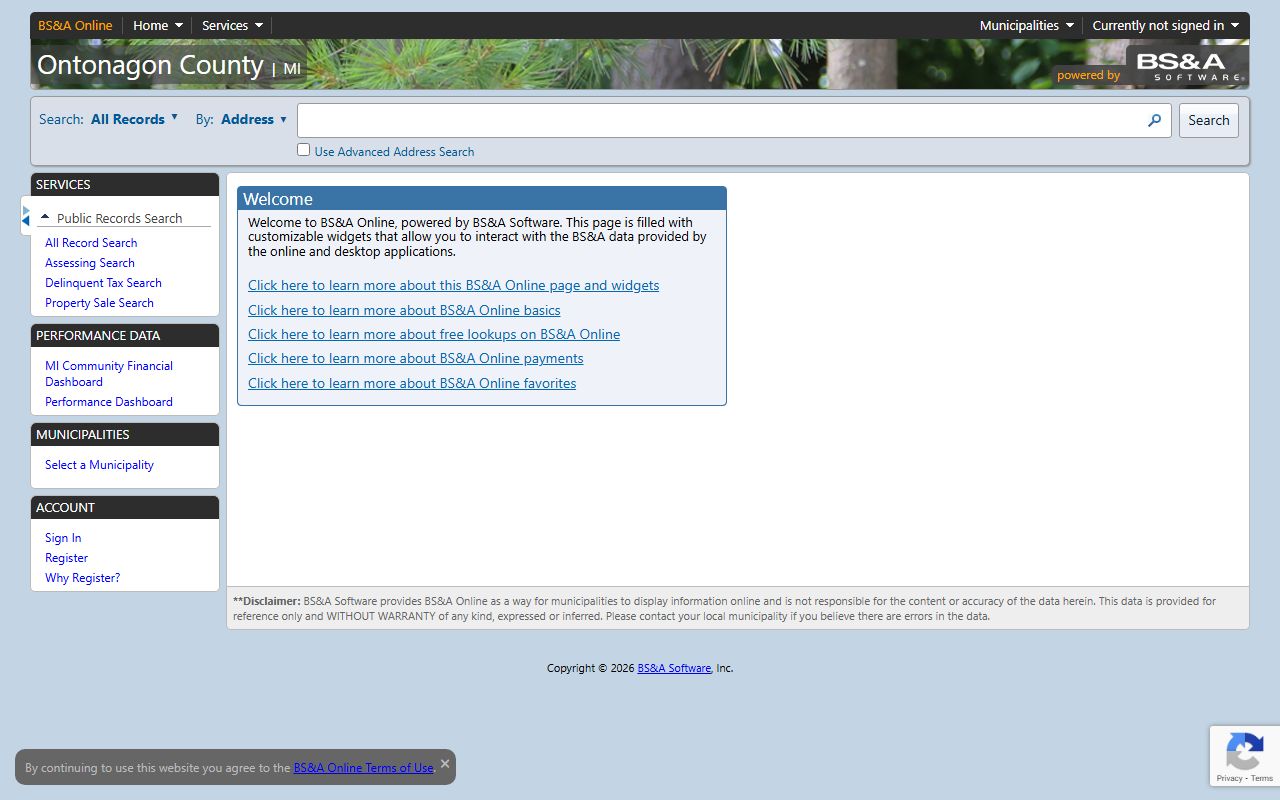
The portal draws data directly from county records and is the most current source available online for Alger County parcels.
For broader Michigan property searches, the Michigan Treasury property tax page links to statewide tools and resources. You can also use the Michigan Property Tax Estimator to project tax bills for any property in the state.
Alger County Equalization Department
The Equalization Department in Alger County carries out the annual process of reviewing and certifying property assessments across all local units in the county. Under MCL 211.1 et seq., Michigan law requires all property to be assessed at 50% of its true cash value. The Equalization Director reviews township assessments and adjusts the county equalized value each spring to meet this requirement. This process directly affects how much property tax each owner pays.
The Equalization Department also handles special assessment districts, reviews exemption applications, and maintains parcel records. Alger County sits in Michigan's Upper Peninsula and contains a large amount of forested and public land. The equalization process accounts for the unique mix of property types found in this part of the state. Most records are public and open to review during business hours.
| Office | Alger County Equalization Department |
|---|---|
| Address | 101 E. Vining St., Munising, MI 49862 |
| Phone | 906-387-2074 |
| County Website | algercounty.gov |
| Online Search | BS&A Online - Alger County |
Alger County Register of Deeds
The Register of Deeds in Alger County records deeds, mortgages, liens, and other property-related documents. When you buy property in Alger County, recording the deed and filing a Property Transfer Affidavit (Form L-4025) with the local assessor are both required steps. The affidavit must be filed within 45 days of the transfer date. Failing to file on time can result in penalties and affects how your new assessed value is calculated.
Copies of recorded documents can be requested from the Register of Deeds office. The standard fee for recording in Michigan is $30 per document. Plain copies cost $1 per page, and certified copies run $5. Contact the Alger County Register of Deeds at 906-387-7041 for document requests or to confirm what is on file for a specific parcel. Recorded documents often help clarify ownership history when reviewing property tax records.
Property Tax Assessment in Alger County
Alger County assessors value property as of December 31 each year, which is Michigan's Tax Day as set by MCL 211.30. The assessed value is meant to equal 50% of the property's true cash value. Taxable value is separate from assessed value and is capped at the lesser of inflation or 5% per year, as long as ownership does not change. When a property transfers to a new owner, the taxable value uncaps and resets to the assessed value the following year.
Assessment notices are mailed to property owners in February. These notices show both the assessed value and the taxable value, along with any exemptions applied. If you believe your assessed value is wrong, the notice period is your first chance to act. You should compare your assessment to recent sales of similar properties in Alger County. The Equalization Department can explain how your value was set and what data was used.
Alger County's Upper Peninsula location means property types vary widely, from lakefront parcels near Lake Superior to heavily wooded inland tracts. These differences affect how assessors apply market data to determine value. The county equalization process makes sure these varied properties are assessed at the correct proportion of market value.
Property Tax Exemptions in Alger County
The Principal Residence Exemption (PRE) is the most widely used property tax exemption in Michigan. Under MCL 211.7u, homeowners who live in their property as their primary residence can remove 18 mills from the school operating tax. You apply by filing Form 2368 with your local assessor by June 1. This exemption does not apply to rental properties or vacation homes, even if you own them. If your primary home changes, you need to rescind the PRE from the old property and apply on the new one.
Agricultural property may qualify for an exemption under MCL 211.7v. Given the rural character of Alger County, some parcels used for farming or forestry may be eligible. Check with the Equalization Department to see if your land qualifies under the agricultural classification rules.
The Poverty Exemption helps low-income homeowners reduce or eliminate their property tax bill. File Form 5737 and Form 4988 with your township assessor. The Board of Review considers these requests each March. Disabled veterans and surviving spouses may also qualify for additional exemptions under Michigan law. Contact the Equalization office to learn which exemptions apply to your situation in Alger County.
Appealing Your Assessment in Alger County
Property owners in Alger County can challenge their assessed value by appearing before the March Board of Review. The Board meets each year in March and hears protests from owners who believe their property is overvalued. You can appear in person or send a written protest before the deadline. Bring documentation to support your position, such as a recent sale price, an appraisal, or data on comparable properties.
If the Board of Review does not lower your assessment to a level you agree with, you can appeal to the Michigan Tax Tribunal. The MTT is an independent body that hears property tax disputes from across the state. Call 517-335-9760 for filing details. The deadline is July 31 for residential properties and May 31 for commercial ones. The Property Taxpayer's Bill of Rights under MCL 205.735 protects your right to a fair process at every step.
Note: Keep your February assessment notice because it contains the information you need to file a timely appeal.
Alger County Property Tax Payments
Property taxes in Alger County are collected at the township level during the tax year. Summer taxes are billed in July and typically due by September 14. Winter taxes are billed in December. After taxes become delinquent, they are turned over to the Alger County Treasurer. The Treasurer handles all delinquent collections, including interest and fees that accrue on unpaid balances.
If your taxes go unpaid long enough, the property enters the forfeiture process. After forfeiture, continued non-payment leads to foreclosure, which results in the county taking ownership of the parcel. Contact the Alger County Treasurer at 906-387-4477 if you have delinquent taxes. The Treasurer can tell you the total amount owed and discuss payment options. Staying current on taxes is the best way to protect your Alger County property.
Communities in Alger County
Alger County is a rural Upper Peninsula county. Munising is the county seat and largest community. Other communities include Grand Marais, Shingleton, and Chatham. None of these municipalities meet the population threshold for individual city pages. Property tax records for all communities in Alger County are accessible through the county Equalization Department and the BS&A online portal.
Nearby Counties
These counties border Alger County in Michigan's Upper Peninsula. Each operates its own equalization office and property records system.