
Luce County Property Tax Lookup
Luce County property tax records are maintained by the County Equalization Department in Newberry. Residents and researchers can search parcel data, review assessed values, and look up tax history through the BS&A Online portal. The Equalization Department oversees records for all townships within the county. Whether you need current assessment figures or past tax data, this page explains how to find Luce County property tax records and which offices handle specific requests.
Luce County Overview
How to Search Luce County Property Tax Records
Luce County uses the BS&A Online platform to provide public access to property tax records. You can search by owner name, parcel number, or address. The portal displays assessed values, taxable values, and tax history for each parcel. It covers all townships within Luce County, so a single search reaches records across the entire county. The system is free to use and does not require an account for basic lookups.
The Luce County BS&A property search portal is your primary online source for property tax records. Enter a name, address, or parcel ID into the search field and the system returns current assessment data, ownership information, and tax status. This saves you a trip to the courthouse in many cases, especially for straightforward parcel lookups. The portal is kept current with each tax year's data.
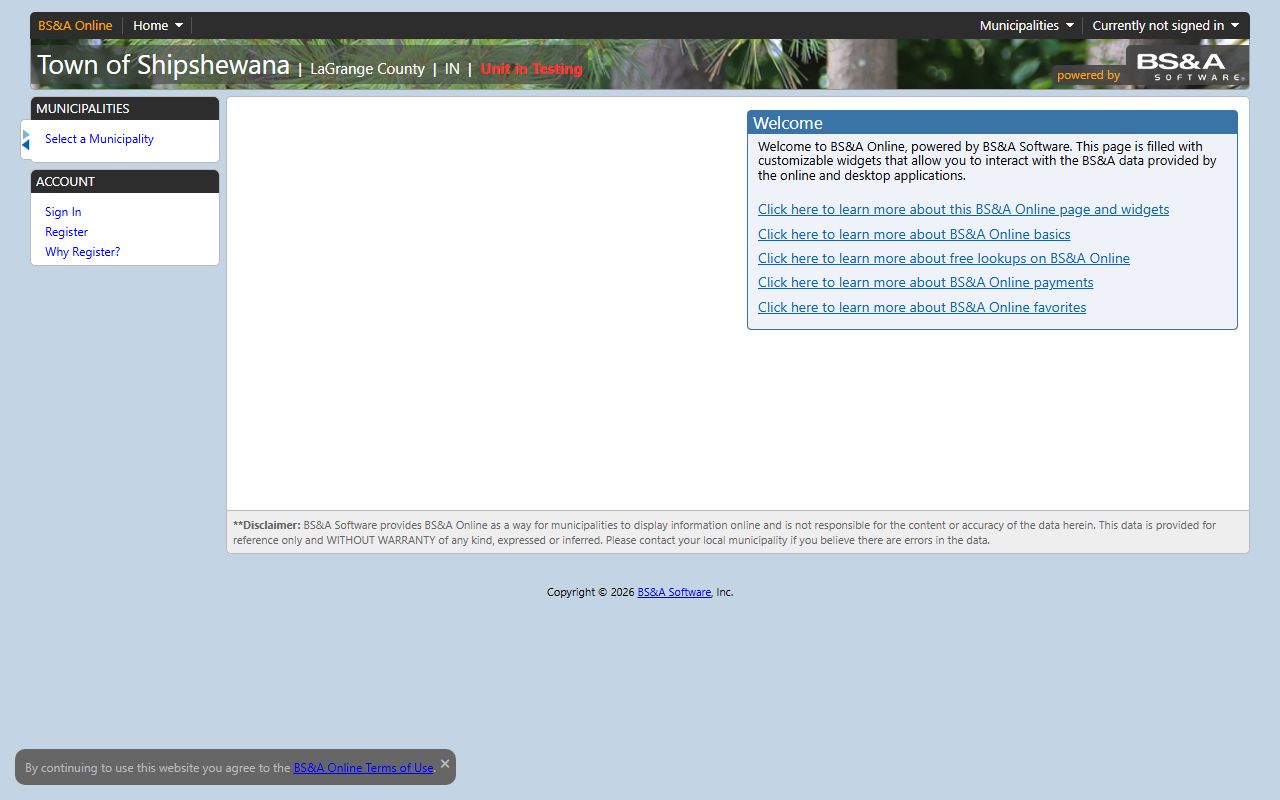
The screenshot below shows the BS&A Online search interface used by Luce County. It is the main tool for accessing property tax records without visiting the Equalization Department in person.
If you prefer to search in person or need records not available online, the Equalization Department is located at 407 W. Harrie St. in Newberry. Call 906-293-5521 to confirm hours and what to bring before you visit.
Luce County Equalization Department
The Equalization Department is the central office for property tax records in Luce County. Director Ronald W. Beauchamp oversees the annual equalization process that reviews township assessment rolls and ensures they meet the standard set by MCL 211.1. Michigan law requires all property to be assessed at 50% of its true cash value. The Equalization Department checks each township's assessment level and applies an adjustment factor if the level is too high or too low.
The department also manages exemption filings, maintains parcel data, and works with local township assessors throughout the year. Most records held by the Equalization Department are public. You can view them during business hours or search many of them through the BS&A Online portal. For questions about how a specific parcel was valued or whether an exemption applies, start with this office.
| Office | Luce County Equalization Department |
|---|---|
| Director | Ronald W. Beauchamp |
| Address | 407 W. Harrie St., Newberry, MI 49868 |
| Phone | 906-293-5521 |
| Online Search | BS&A Online - Luce County |
Luce County Register of Deeds
The Register of Deeds records all real estate documents in Luce County. This office handles deeds, mortgages, liens, easements, and other instruments that affect property ownership. When a property transfers, the new owner must file a Property Transfer Affidavit (Form L-4025) with the local assessor within 45 days. This triggers the uncapping of taxable value as required under Michigan law. Missing this deadline can result in penalties and a delayed reset of the taxable value.
Register Sandra A. Bergman manages recorded documents for the county. The Register of Deeds office shares the address and phone number with the Equalization Department: 407 W. Harrie St., Newberry, MI 49868, phone 906-293-5521. The standard recording fee in Michigan is $30 per document. Copies cost $1 per page and certified copies are $5. Contact the office directly for questions about specific recorded instruments or to request copies of documents.
Note: Checking the Register of Deeds before a purchase confirms that all prior transfers were properly recorded and that no liens remain outstanding on the parcel.
Property Tax Assessment in Luce County
All property in Luce County is assessed as of December 31, which Michigan calls Tax Day under MCL 211.30. Township assessors value each parcel and submit those values to the Equalization Department, which reviews them to confirm they reflect 50% of true cash value. If a township's values fall short of or exceed this standard, the department applies an equalization multiplier. Assessment notices go out in February, allowing property owners to review values before the March Board of Review.
Michigan's taxable value cap limits how much your taxable value can rise each year. The cap is the lesser of the inflation rate or 5%. It stays in place as long as the same owner holds the property. When a sale happens, the taxable value uncaps and resets to the assessed value in the following year. This can cause a noticeable increase in taxes after a purchase. Use the Michigan Property Tax Estimator on the state treasury website to project your tax bill after buying property in Luce County.
Luce County is largely forested and rural, with low population density across its townships. The Michigan Treasury property tax page has statewide guidance on how assessed values, taxable values, and millage rates combine to produce the tax bill on your annual statement.
Property Tax Exemptions in Luce County
The Principal Residence Exemption, or PRE, gives Luce County homeowners relief from 18 mills of school operating taxes. Under MCL 211.7u, you qualify if the property is your primary home. File Form 2368 with your local township assessor by June 1. If you move into a new home after that date, you can still file by November 1 for a partial-year exemption. You can only hold one PRE at a time across all properties you own.
Agricultural property in Luce County may qualify for an exemption under MCL 211.7v. Given the county's significant amount of rural land, this exemption is relevant for many parcel owners. The property must meet the state's definition of agricultural use. Ask your township assessor what documentation is needed to file and whether your parcel qualifies.
The Poverty Exemption assists low-income homeowners who meet income and asset requirements. File Form 5737 and Form 4988 with your township assessor before the March Board of Review. The Board rules on these requests each spring. Disabled veterans and surviving spouses may be eligible for additional exemptions under Michigan law. Contact your township assessor to learn which programs apply to your household.
Appealing Your Luce County Assessment
If you believe your property is assessed too high in Luce County, start with the March Board of Review held by your local township. You can attend in person or submit a written protest before the township's deadline. Supporting evidence matters. Bring a recent appraisal, comparable sales from nearby properties, or documentation showing the property's current condition. The Board reviews your materials and can reduce your assessed value if the evidence supports it.
If the Board of Review does not give you the result you need, you can take your case to the Michigan Tax Tribunal. The MTT handles property tax appeals from owners across Michigan. For residential and agricultural property, the deadline to file is July 31. For commercial property, it is May 31. Contact the MTT at 517-335-9760. Your rights throughout this process are protected under the Property Taxpayer's Bill of Rights, MCL 205.735.
Luce County Property Tax Payments
Property taxes in Luce County are collected at the township level. Summer taxes are typically billed in July and due in September. Winter taxes are billed in December and due in February. Due dates vary by township, so check with your local township treasurer to confirm the deadlines for your parcel. Most townships accept payments in person, by mail, and some offer online options.
Once the township collection period ends, unpaid balances are forwarded to the Luce County Treasurer. Treasurer Kristine M. Groleau handles delinquent tax collections, payment plans, and forfeiture proceedings. Call 906-293-5521 to ask about a delinquent balance or to arrange a payment plan. Taxes that remain unpaid enter forfeiture after one year and can move to foreclosure after three. Acting quickly on a past-due bill is the best way to avoid compounding fees and the risk of losing the property.
Note: Delinquent taxes in Michigan accrue interest and fees over time, making early payment the most cost-effective approach.
Cities in Luce County
Luce County is a rural Upper Peninsula county. Newberry is the county seat and the main community in the county. Other small communities exist within the county's townships, but none of them meet the population threshold for individual city pages on this site. Property tax records for all areas in Luce County are handled through the county Equalization Department and the BS&A Online portal.
Nearby Counties
These counties are near Luce County in Michigan's Upper Peninsula. Each has its own equalization office and property tax records system. If a parcel is close to a county boundary, verify which county it falls in before searching.