
Lenawee County Tax Records Lookup
Lenawee County property tax records are maintained by the Equalization Department at 301 N. Main St. in Adrian. Residents, buyers, and researchers can search parcel data online through the BS&A Online platform, which covers assessed values, taxable values, and tax history for all townships and cities in the county. This guide covers how to search Lenawee County property tax records, what the Equalization Department does, and how to challenge your assessment if you think the value is wrong.
Lenawee County Overview
How to Search Lenawee County Property Tax Records
Lenawee County uses BS&A Online for public access to property tax records. The Lenawee County BS&A Online property search portal lets you look up parcels by owner name, property address, or parcel number. Results show the current owner, legal description, assessed value, taxable value, school district, and tax history. The system covers all townships and cities within Lenawee County, giving you a single place to search parcels across the county.
The portal is free and open to the public without registration. If you cannot locate a parcel by address, try the parcel identification number from your tax bill or assessment notice. For GIS mapping and detailed parcel boundary data, the Lenawee County GIS system provides interactive mapping tools linked to property records. The GIS system is especially helpful when you need to see parcel boundaries, confirm acreage, or identify adjacent parcels.
If you need records not available online, or if you have specific questions about a parcel's assessment history, contact the Equalization Department at 301 N. Main St. in Adrian. Director Jack M. Holcomb's office can be reached at 517-264-4522. Staff can assist with lookups, value questions, and documentation requests during regular office hours.
The screenshot below shows the BS&A Online portal used for Lenawee County property tax record searches. This is the primary public tool for accessing parcel and assessment data in the county.
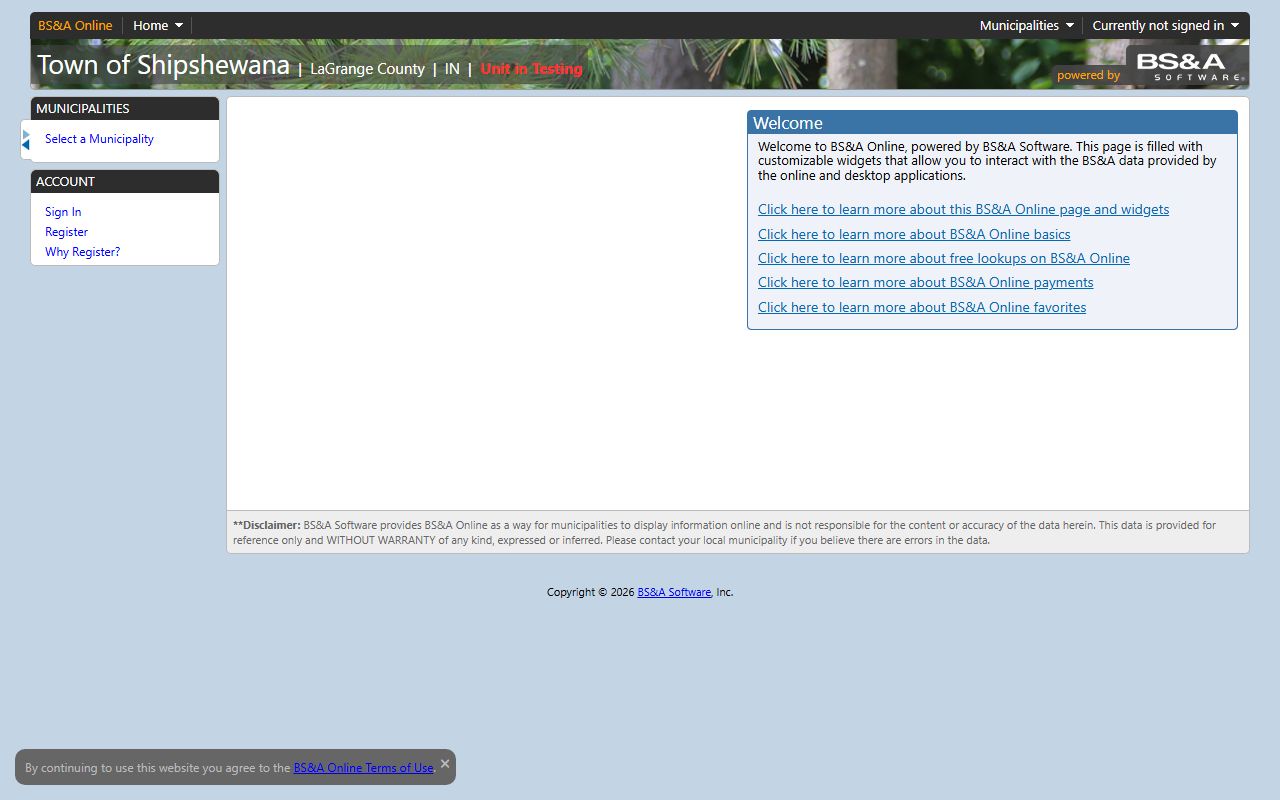
The county updates the portal to reflect current assessment year data. Contact the Equalization Department if portal data does not match your assessment notice.
Lenawee County Equalization Department
The Equalization Department in Lenawee County reviews township and city assessments each year to confirm they comply with Michigan's requirement that all property be assessed at 50% of true cash value, as set out in MCL 211.1 et seq.. Director Jack M. Holcomb leads the office, which monitors assessment levels across all local units in the county and applies equalization factors when local values fall outside acceptable ranges. Lenawee County includes a mix of urban, agricultural, and rural parcels spread across its townships and cities, which the department manages through the annual equalization cycle.
The office also handles exemption applications, maintains the county's property data, and manages special assessment rolls. Records are public and can be viewed during regular business hours at 301 N. Main St. in Adrian. Much of the data is also available through the BS&A Online portal. If you have questions about parcel classification, value methodology, or exemption eligibility, the Equalization Department is the right place to start.
Note: The Equalization Department sets assessed values but does not calculate your final tax bill. Millage rates set by local units, schools, and the county combine with your assessed value to determine what you owe.
| Office | Lenawee County Equalization Department |
|---|---|
| Director | Jack M. Holcomb |
| Address | 301 N. Main St., Adrian, MI 49221 |
| Phone | 517-264-4522 |
| Online Search | BS&A Online - Lenawee County |
| GIS Mapping | Lenawee County GIS |
Lenawee County Register of Deeds
The Register of Deeds records all instruments that affect real property in Lenawee County. Deeds, mortgages, liens, easements, discharges, and other legal instruments are filed here and kept as permanent public records. Register Carrie A. Harsh oversees the office at 301 N. Main St. in Adrian. Contact the Register of Deeds at 517-264-4537 for document requests, certified copies, or questions about what instruments are on file for a specific parcel.
After any property sale or transfer in Lenawee County, the new owner must file a Property Transfer Affidavit (Form L-4025) with the local township or city assessor within 45 days. This step triggers the uncapping of the taxable value under Michigan law, resetting it to equal the assessed value in the following tax year. Buyers who miss the 45-day window can face complications with the assessment and any exemptions they plan to claim. The standard Michigan recording fee is $30 per document. Copies cost $1 per page, and certified copies are $5.
Property Tax Assessment in Lenawee County
Property in Lenawee County is assessed as of December 31 each year, which is Michigan's Tax Day under MCL 211.30. Township and city assessors set values for individual parcels based on market conditions, and the Equalization Department reviews those values each spring. Assessment notices go to property owners in February. The notice shows both the assessed value (target of 50% of true cash value) and the taxable value, which is the figure used to calculate the actual tax bill.
Michigan's taxable value cap limits increases to the lesser of the inflation rate or 5% per year. Long-term property owners often have taxable values well below their assessed values as a result. That changes when the property is sold. The year after a transfer, the taxable value uncaps and resets to equal the full assessed value. For buyers in Lenawee County, particularly those purchasing homes in Adrian or other cities where values have risen in recent years, this can mean a meaningful increase in property taxes after purchase. Use the Michigan Property Tax Estimator to get a realistic picture of taxes before closing.
Lenawee County includes urban areas like Adrian and Tecumseh as well as a large agricultural base across its townships. Each local unit sets its own millage rates, and school districts add additional levies. The Michigan Treasury property tax resource provides statewide context for how assessments and millage rates work together to produce your tax bill.
Property Tax Exemptions in Lenawee County
Lenawee County homeowners who use their property as a primary residence can claim the Principal Residence Exemption under MCL 211.7u. The PRE removes 18 mills from the school operating tax, which results in a meaningful reduction in most homeowners' tax bills. File Form 2368 with your local assessor by June 1. The exemption applies only to the home you actually live in as your primary residence. Rental properties and vacant land do not qualify.
Farmland and qualifying agricultural operations in Lenawee County may be eligible for an exemption under MCL 211.7v. Lenawee County has significant agricultural acreage, and property owners who meet the statutory definition of agricultural use can access this program. Contact your township assessor or the Equalization Department to confirm whether your property qualifies and to obtain the right forms. The Poverty Exemption is also available for low-income homeowners through Form 5737 and Form 4988, filed before the March Board of Review. Disabled veterans and qualifying surviving spouses have access to additional exemptions under Michigan statute.
Appealing Your Lenawee County Assessment
If you believe your Lenawee County property is assessed too high, you can challenge it. The first step is the March Board of Review in your township or city. Each local unit holds its own Board of Review in March to hear owner protests. You can appear in person or submit a written protest before the deadline. Evidence matters here. A recent independent appraisal or comparable sales data from similar nearby properties will give your appeal the best chance of success.
If the Board of Review does not adjust your assessment, the next step is the Michigan Tax Tribunal. The MTT is an independent state body that hears property tax appeals from owners across Michigan. For residential property, the filing deadline is July 31. For commercial and industrial property, it is May 31. The MTT can be reached at 517-335-9760. The Property Taxpayer's Bill of Rights under MCL 205.735 outlines your rights throughout the process, from the Board of Review through any MTT proceedings.
Note: Keep records of all documents you submit during an appeal. If you escalate to the Tax Tribunal, you will need everything you filed at the Board of Review level.
Lenawee County Property Tax Payments
Local township and city treasurers handle the initial collection of property taxes in Lenawee County. Summer taxes are generally due in September, and winter taxes come due in February. Each local unit sets its own specific deadlines. Check with your township or city treasurer to confirm the exact due dates for your parcel. Adrian, Tecumseh, and other cities in the county may have slightly different schedules than the rural townships.
After the local collection period ends, unpaid taxes become delinquent and are forwarded to the Lenawee County Treasurer. Treasurer Rob L. Tallman's office handles delinquent tax collection, payment plans, and properties in forfeiture. The office is at 301 N. Main St. in Adrian and can be reached at 517-264-4554. Michigan law sets clear timelines for forfeiture and foreclosure, starting one year after delinquency. Acting on unpaid taxes early limits the interest and fees that accumulate and protects against the risk of property loss through the foreclosure process.
Cities in Lenawee County
Lenawee County includes Adrian as the county seat, as well as other cities and communities such as Tecumseh, Blissfield, and Morenci. None of these municipalities meet the population threshold for a dedicated city page. Property tax records for all communities in Lenawee County are handled through the Equalization Department and the BS&A Online portal. City-level assessors in Adrian and Tecumseh handle local assessment rolls within the county's equalization framework.
Nearby Counties
These counties border Lenawee County. Each maintains its own equalization office and property tax records system. If a parcel is near a county line, confirm which county it falls in before searching.