
Search Mackinac County Property Tax Records
Mackinac County property tax records are managed by the County Equalization Department in St. Ignace. Residents, property owners, and researchers can search parcel data, review assessed values, and access tax and delinquent records through the BS&A Online portal. The Equalization Department covers all townships and communities within the county. This page explains where to find Mackinac County property tax records online and how to contact the right offices when you need more help.
Mackinac County Overview
How to Search Mackinac County Property Tax Records
Mackinac County uses the BS&A Online platform to provide public access to property tax records. The portal lets you search by owner name, parcel number, or property address. Results include assessed values, taxable values, tax status, and delinquent tax information where applicable. The county equalization page at mackinaccounty.net/departments/equalization/ provides additional context on local assessment practices and links to department resources.
The screenshot below shows the BS&A Online portal that serves Mackinac County. This is the primary tool for finding property tax records in the county without visiting the Equalization Department in person.
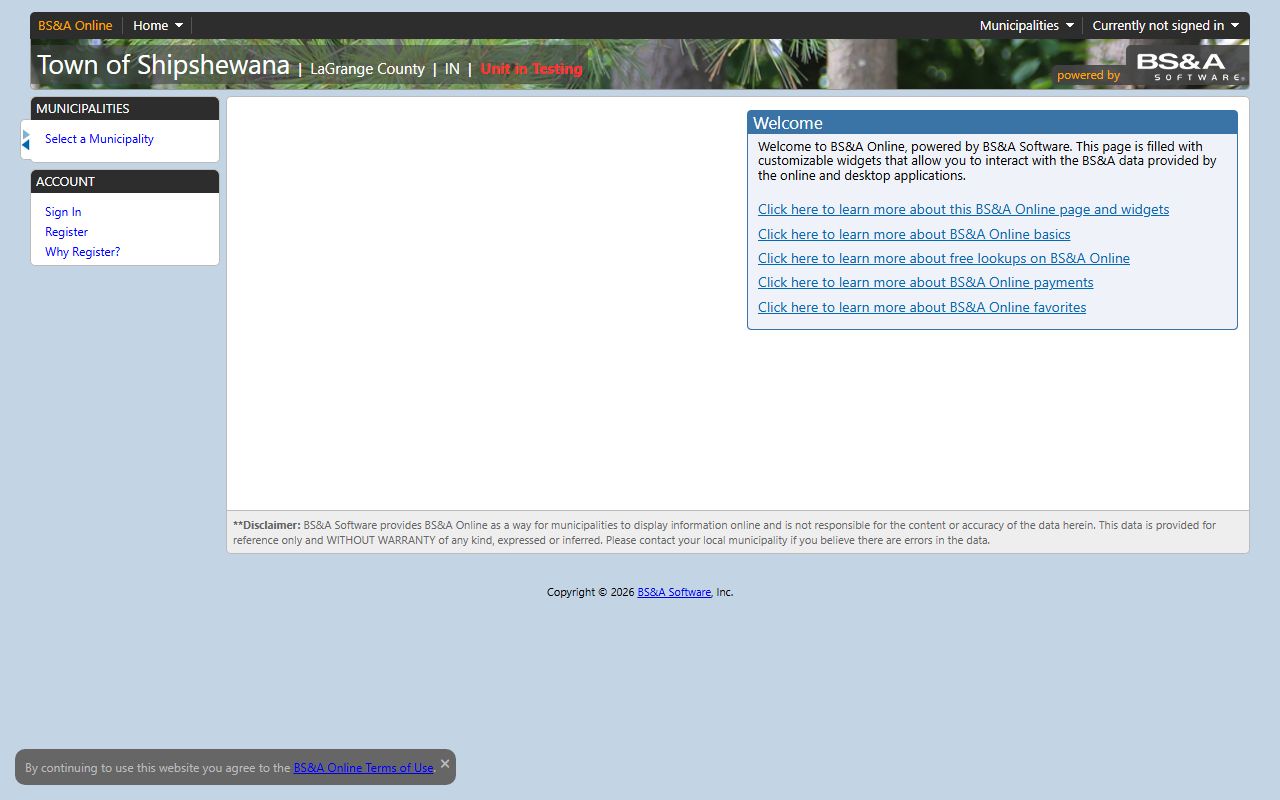
The portal is updated regularly to reflect current tax year data. For records not found online or for questions about a specific parcel, contact the Equalization Department at 100 S. Marley St. in St. Ignace, phone 906-643-7320.
Mackinac County Equalization Department
The Equalization Department is the main office for property tax records in Mackinac County. Director Rodney J. Wengernuk oversees the annual equalization process, which ensures that township assessment rolls meet the standard required by MCL 211.1. Michigan law mandates that all property be assessed at 50% of its true cash value. The Equalization Department reviews township-level assessments each spring and adjusts them if they fall outside that standard.
Beyond the annual equalization review, the department manages parcel data, reviews exemption applications, and supports township assessors throughout the year. Most Equalization Department records are public. You can review them in person during business hours or access many of them through the BS&A Online portal. For Mackinac County, the BS&A portal covers tax records, assessment data, and delinquent status for all parcels in the county.
| Office | Mackinac County Equalization Department |
|---|---|
| Director | Rodney J. Wengernuk |
| Address | 100 S. Marley St., St. Ignace, MI 49781 |
| Phone | 906-643-7320 |
| Online Search | BS&A Online - Mackinac County |
| Equalization Page | Mackinac County Equalization |
Mackinac County Register of Deeds
The Register of Deeds in Mackinac County records all real estate documents, including deeds, mortgages, liens, and other instruments that affect property ownership. When a property changes hands, the buyer must file a Property Transfer Affidavit (Form L-4025) with the local township assessor within 45 days of the transfer date. Failing to file on time results in a penalty and can affect when the taxable value uncapping takes effect.
Register Gloria J. Schmitz manages recorded documents for the county. The Register of Deeds office is at 100 S. Marley St., St. Ignace. Call 906-643-7304 for questions about recorded instruments or to request copies. The standard recording fee in Michigan is $30 per document. Copies are $1 per page. Certified copies cost $5. Recorded documents are an important reference point for confirming ownership history and checking whether any liens remain attached to a property.
Note: Always confirm that a Property Transfer Affidavit has been filed after buying property in Mackinac County to avoid assessment penalties and ensure the taxable value uncaps correctly.
Property Tax Assessment in Mackinac County
All property in Mackinac County is assessed as of December 31 each year, which Michigan designates as Tax Day under MCL 211.30. Local township assessors value each parcel and submit those rolls to the Equalization Department, which reviews them for accuracy. The assessed value must equal 50% of the property's true cash value. If a township's level of assessment is off, the Equalization Department applies a factor to bring it into line. Assessment notices go out in February, ahead of the March Board of Review deadline.
The taxable value cap is a key feature of Michigan's property tax system. It limits annual growth in taxable value to the lesser of the inflation rate or 5%. This cap stays in place as long as the same owner holds the property. A transfer or sale uncaps the taxable value, which then resets to the assessed value in the following year. For properties in areas where market values have risen significantly, this can mean a large tax increase after purchase. Use the Michigan Property Tax Estimator to project what taxes will look like after buying a parcel in Mackinac County.
The Michigan Treasury property tax page provides statewide guidance on how millage rates, assessed values, and taxable values combine to determine your tax bill each year.
Property Tax Exemptions in Mackinac County
The Principal Residence Exemption, known as the PRE, is the most common exemption for Mackinac County homeowners. It removes 18 mills from school operating taxes on your primary home. Under MCL 211.7u, you qualify if the property is your main residence. File Form 2368 with your township assessor by June 1. If you take ownership of a new primary home after June 1, you can file by November 1 for a partial-year exemption. You can claim only one PRE at a time.
Mackinac County has a significant amount of rural and forested land, and some agricultural parcels may qualify under MCL 211.7v. If you own farmland or agricultural property in the county, ask your township assessor whether it qualifies and what documentation the state requires.
The Poverty Exemption is available for low-income homeowners who meet the income and asset limits set by their township. File Form 5737 and Form 4988 with your township assessor and request a hearing before the March Board of Review. Disabled veterans and surviving spouses may also qualify for separate exemptions under Michigan law. Contact your township assessor to learn what applies to your situation.
Appealing Your Mackinac County Assessment
If you think your Mackinac County property is overassessed, the first step is the March Board of Review held by your local township. You can appear in person or file a written protest before the township's posted deadline. Bring evidence: a recent appraisal, comparable sales data from similar properties in the area, or photos and records showing the property's actual condition. The Board reviews your submission and can lower your assessment if your evidence supports a different value.
If the Board of Review does not resolve the problem, you can escalate to the Michigan Tax Tribunal. The MTT is the state-level body that handles property tax disputes from all Michigan counties. For residential and agricultural property, the filing deadline is July 31. For commercial and industrial parcels, it is May 31. Reach the MTT at 517-335-9760. The Property Taxpayer's Bill of Rights under MCL 205.735 protects your rights at each stage of the appeal process.
Mackinac County Property Tax Payments
Property taxes in Mackinac County are collected by township treasurers. Summer taxes are typically billed in July and due in September. Winter taxes are billed in December and due in February. Exact due dates vary by township, so contact your local township treasurer to confirm the deadlines for your specific parcel.
After the township collection period closes, unpaid balances are sent to the Mackinac County Treasurer. Treasurer Lori A. Annand manages delinquent tax collections, payment plans, and forfeiture proceedings for the county. Call 906-643-7306 to ask about a delinquent balance or to set up a payment arrangement. In Michigan, taxes that go unpaid enter forfeiture after one year of delinquency and can proceed to foreclosure after three years. Reaching out early limits the fees and interest that accumulate on past-due balances.
Note: Once a parcel enters forfeiture, the redemption options become more limited and the costs grow, so address any outstanding tax debt as soon as possible.
Cities in Mackinac County
Mackinac County is a lightly populated Upper Peninsula county. St. Ignace is the county seat and the largest community in the county. Other communities include Naubinway, Engadine, and Moran Township, among others. None of these municipalities meet the population threshold for individual city pages on this site. Property tax records for all communities in Mackinac County are handled through the county Equalization Department and the BS&A Online portal.
Nearby Counties
These counties are near Mackinac County. Each has its own equalization office and property tax records system. If a parcel sits near a county line, confirm which county it falls in before running a search.