
Montmorency County Property Tax Records
Montmorency County property tax records are kept by the County Equalization Department in Atlanta. The county is in northeast Michigan and is known for its forested land and rural character. Owners and researchers can search parcel data, assessed values, and tax history through the BS&A online portal. This page covers the offices that manage Montmorency County property tax records, how assessments work, what exemptions are available, and what to do if your property is overassessed.
Montmorency County Overview
How to Search Montmorency County Property Tax Records
Montmorency County uses the BS&A Online platform for public access to property tax records. The portal lets you search by owner name, property address, or parcel number. It covers all townships in the county and shows assessed values, taxable values, legal descriptions, and tax history. You do not need to set up an account to do a basic search. Most Montmorency County property tax lookups can be done fully online without a trip to the courthouse in Atlanta.
Go to the Montmorency County BS&A property search to start your search. The portal includes tax, assessment, and delinquent search options. Montmorency County is a smaller county with a modest number of parcels, so results tend to come back quickly. If you are looking at a parcel that straddles a county line, confirm which county claims it before searching. Nearby counties like Otsego, Alpena, and Oscoda each have their own systems.
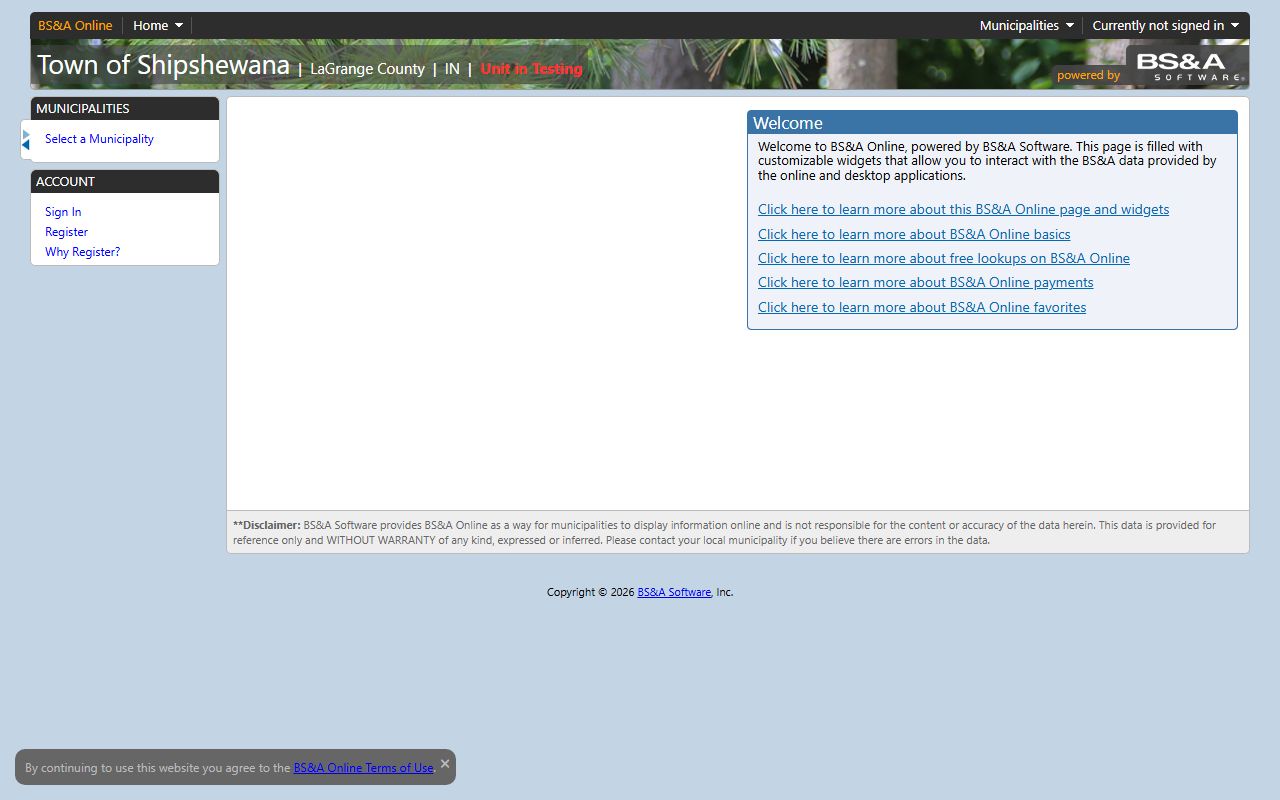
The screenshot below shows the BS&A search portal used for Montmorency County property tax records. This is the primary tool for online lookups in this county.
For records not available online, visit or call the Equalization Department in Atlanta during regular business hours.
Montmorency County Equalization Department
Director Steven W. Koeppe runs the Montmorency County Equalization Department. The office conducts the annual equalization process, reviewing assessments submitted by local township assessors to ensure they comply with MCL 211.1 et seq., which requires all property in Michigan to be assessed at 50% of true cash value. In a small rural county like Montmorency, this process involves a relatively compact set of parcels compared to urban counties, but the legal standards are the same.
The office handles exemption inquiries, special assessment reviews, and general property data questions. Records held by the Equalization Department are public and available for review during business hours. Call ahead to 989-785-8073 to confirm hours and what you need to bring. The office is located at 12265 M-32 in Atlanta, the county seat.
| Office | Montmorency County Equalization Department |
|---|---|
| Director | Steven W. Koeppe |
| Address | 12265 M-32, Atlanta, MI 49709 |
| Phone | 989-785-8073 |
| Online Search | BS&A Online - Montmorency County |
Montmorency County Register of Deeds
The Montmorency County Register of Deeds records all real estate documents affecting property ownership in the county. Deeds, mortgages, liens, and other instruments are filed and indexed here. When a property is sold or transferred, the new owner must file a Property Transfer Affidavit (Form L-4025) with the local assessor within 45 days of the transfer. This form triggers the uncapping of the property's taxable value as required by Michigan law. Skipping or delaying the filing can create errors in the assessment record that take time to fix.
Register Carrie A. Kowalski leads the office, which is at 12265 M-32 in Atlanta. Call 989-785-8072 for document requests or to verify what is on file for a specific parcel. Standard Michigan recording and copy fees apply. Recording a document costs $30, copies are $1 per page, and certified copies run $5 each.
Note: Deed records are separate from tax records but they are closely linked. Researching both gives a complete view of ownership and payment history on any parcel.
Property Tax Assessment in Montmorency County
All Montmorency County parcels are assessed as of December 31 each year under MCL 211.30. Township assessors value each parcel, and the Equalization Department reviews those totals each spring to confirm the county meets the 50% of true cash value standard. Assessment notices are mailed in February. Look at both the assessed value and the taxable value on your notice. These two numbers serve different purposes and affect how much tax you pay.
Michigan's taxable value cap limits annual increases to the lesser of inflation or 5% as long as the owner does not change. When a property sells, the cap lifts and taxable value resets upward to match the assessed value the following year. In Montmorency County, where lakefront and forested parcels can have a wide gap between taxable and assessed values, this reset can produce a significant tax jump for new buyers. Use the Michigan Property Tax Estimator to project your first full tax year before you close. The Michigan Treasury has full documentation on how the cap and uncapping process works.
Property Tax Exemptions in Montmorency County
Montmorency County homeowners who occupy their property as their primary residence can claim the Principal Residence Exemption (PRE). Under MCL 211.7u, this removes 18 mills of school operating tax from the annual bill. File Form 2368 with your local township assessor by June 1. Many property owners in this county have seasonal or vacation properties, so it is important to note the PRE applies only to your primary home, not a second or recreational property.
Agricultural land in Montmorency County can qualify for a tax exemption under MCL 211.7v. The property must meet the state's definition of qualified agricultural property. The Poverty Exemption is also available for low-income homeowners. File Form 5737 and Form 4988 with your township assessor before the March Board of Review. Disabled veterans and their surviving spouses may qualify for additional exemptions under state law. Call the Equalization Department at 989-785-8073 to ask which programs apply to your situation.
Note: The PRE does not apply automatically. You must file the form, and it must be re-filed if you ever lose eligibility and then regain it.
Appealing Your Montmorency County Assessment
If you think your Montmorency County assessment is too high, start with the March Board of Review held by your local township. You can appear in person or submit a written protest before the deadline set by the township. Be prepared with evidence: a recent independent appraisal is the strongest support, but documented comparable sales in your area can also make a case. The Board reviews what you bring and can reduce the assessment if the evidence holds up.
If the Board of Review does not resolve the issue, you have the right to file a petition with the Michigan Tax Tribunal. This is a state agency that hears property tax disputes from across Michigan. For residential property, the MTT filing deadline is July 31. For commercial and industrial property, it is May 31. The Property Taxpayer's Bill of Rights under MCL 205.735 explains your rights at each step. You can reach the MTT at 517-335-9760.
Montmorency County Property Tax Payments
In Montmorency County, summer and winter taxes are collected first by local township treasurers. Summer taxes are typically due in September and winter taxes in February, though exact deadlines depend on your local unit. Contact your township treasurer to confirm your specific due dates. Once taxes become delinquent, the County Treasurer takes over collection. Treasurer Deborah R. LaLonde manages delinquent accounts and can be reached at 989-785-8074.
The County Treasurer handles delinquent collections, payment plan requests, and the forfeiture process for parcels with unpaid taxes. Michigan law allows county foreclosure after three years of tax delinquency. If your Montmorency County taxes have fallen behind, reach out to the Treasurer's office soon. A payment plan can slow the accumulation of fees and interest, and it protects your ownership of the property while you work through the balance. The sooner you contact the office, the more options you have.
Note: Delinquent taxes add interest and fees under Michigan law, and those costs grow every year the account stays open.
Cities in Montmorency County
Montmorency County is one of Michigan's smaller rural counties. Atlanta is the county seat. Other communities include Hillman, Lewiston, and Mio. None of these municipalities meet the population threshold for individual city pages. Property tax records for all communities in Montmorency County are handled through the county Equalization Department and the BS&A online portal.
Nearby Counties
Montmorency County is bordered by five counties in northeast Michigan. Each has its own equalization office and property records system. If a parcel is near a county boundary, confirm which county it belongs to before you search.